

 English
 русский

Large Steel Forged Gear Blanks Manufacturers
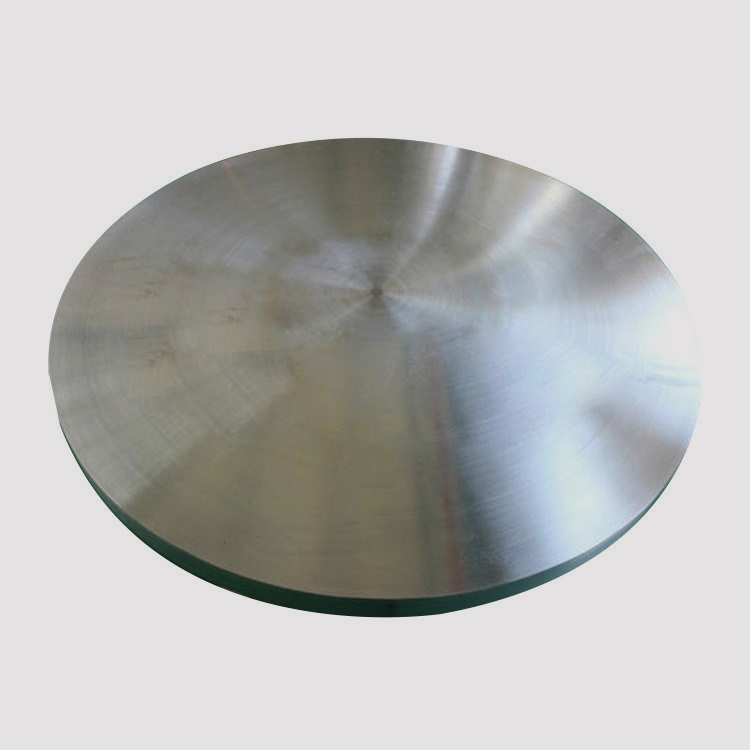
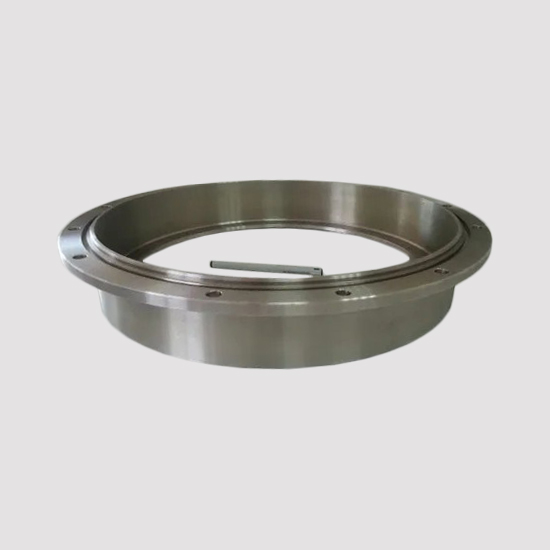
Jiangyin Golden Machinery Equipment Co., Ltd.
Jiangyin Golden Machinery Equipment Co., Ltd. covers an area of 10,000 square meters and has several standardized workshops. We specialize in the production of medium and small forgings and flanges, supported by advanced equipment and mature production technologies for sawing, forging, heat treatment, and precision rough machining.
We are China Forged Gear Blanks Manufacturers and Custom Large Steel Gears Factory. We are capable of meeting the requirements of customers across multiple industries, including power, petroleum, chemical engineering, metallurgy, machinery, light industry, and shipbuilding. By actively expanding into international markets, we have established cooperative relationships with several well-known enterprises, including Rich Reiter (Sweden), Alstom (France), Konecranes (Finland), Danieli (Italy), and General Electric (USA). Our products and services have earned wide recognition and praise from customers.
certification
-
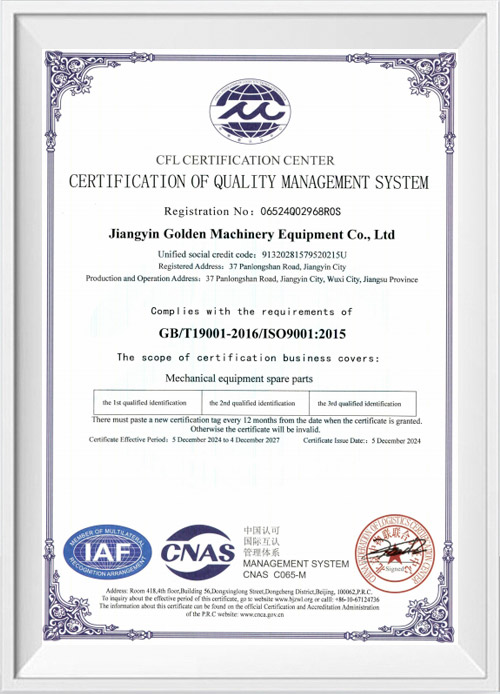 ISO9004
 -
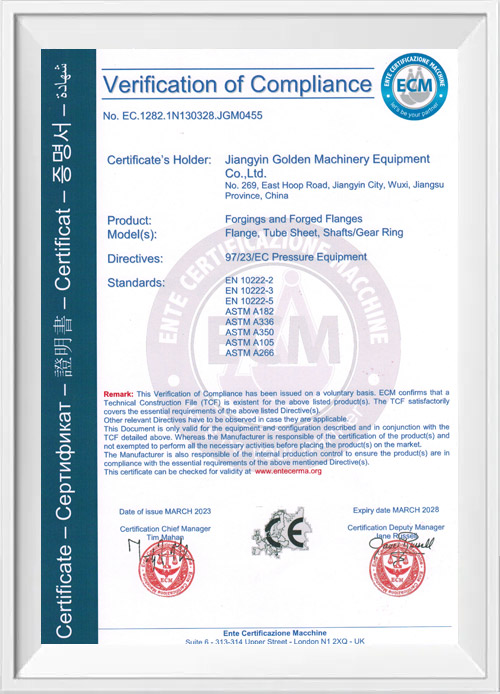 ECM
ECM -
ISO9001
News
-
Industry News 2026-07-17
Precision Metal Components Steel Shaft Selection Guide: Materials, Manufacturing, and Performance A steel shaft's performance depends on decisions made long be...
View More -
Industry News 2026-07-10
What Is Ring Forging Ring forging is a metal-shaping process that produces seamless, circular components by deforming a pierced metal blank under high pressure...
View More -
Industry News 2026-07-03
What Determines Load Capacity and Fatigue Life in a Steel Eccentric Shaft A steel eccentric shaft transmits rotating force off-center from its axis, and the f...
View More -
Industry News 2026-06-22
What "Forged in Steel" Actually Means for Part Performance A component is forged in steel when a solid billet is compressed under high pressure — by hammer, p...
View More -
Industry News 2026-06-16
What Is Forged Alloy Steel Forged alloy steel is steel that has been shaped through the application of compressive force — hammer blows or die pressing — at el...
View More
Forged Gear Blanks Industry Knowledge
Forged Gear Blanks and Large Steel Gears: Comprehensive Industry Guide
Introduction to Forged Gear Blanks Manufacturing
Forged gear blanks represent the foundational components in high-performance mechanical power transmission systems. JIANGYIN GOLDEN MACHINERY EQUIPMENT CO., LTD. specializes in manufacturing premium quality forged gear blanks and large steel gears, serving critical industries worldwide. Our 10,000 square meter facility equipped with standardized workshops enables us to deliver precision-engineered components that meet the most demanding specifications.
The manufacturing of large steel gears requires sophisticated processes that transform raw steel into durable, high-strength components capable of withstanding extreme operational stresses. Through advanced sawing, forging, heat treatment, and precision rough machining technologies, we ensure every forged gear blank meets international quality standards.
Manufacturing Process and Technical Parameters
Complete Production Workflow
The production of forged gear blanks follows a rigorous multi-stage process designed to optimize material properties and dimensional accuracy:
- Material Selection: Premium alloy steels including 42CrMo, 40Cr, 35CrMo, and 20CrMnTi selected based on application requirements
- Sawing and Cutting: Precision cutting of raw billets to specified weights ranging from 50kg to 5,000kg
- Hot Forging: Controlled heating to 1100°C - 1200°C followed by precision forging to achieve optimal grain structure
- Heat Treatment: Normalizing, quenching, tempering, and conditioning processes to achieve hardness ranges of HB 180-280
- Precision Rough Machining: Initial machining to prepare surfaces for final finishing operations
- Quality Inspection: Ultrasonic testing (UT), magnetic particle testing (MT), and dimensional verification
Technical Specifications Table
| Parameter Category | Specification Range | Industry Standard |
| Single Piece Weight | 50kg - 5,000kg | Customizable per application |
| Maximum Outer Diameter | Up to 2,000mm | Larger sizes available on request |
| Module Range | Mn 5 - Mn 40 | ISO 1328 compliance |
| Gear Accuracy Grade | ISO 1328 Class 6-8 | Precision to standard applications |
| Surface Roughness | Ra 3.2 - 6.3 μm | Post-machining finish |
| Hardness After Heat Treatment | HB 180 - 280 | Tempered and conditioned |
| Grain Size Rating | Grade 5 or finer | ASTM E112 standard |
| Internal Quality Level | UT/MT Class 2 or higher | GB/T 6402, EN 10228-3 |
Material Science and Metallurgical Advantages
Why Forging Surpasses Casting for Critical Applications
Forged gear blanks demonstrate superior mechanical properties compared to cast alternatives due to the fundamental metallurgical transformations occurring during the forging process:
Grain Structure Optimization: The hot forging process breaks down cast grain structures and creates refined, uniform grain flow aligned with the component's stress patterns. This grain flow continuity increases fatigue resistance by 30-50% compared to cast gears.
Density and Soundness: Forging eliminates internal porosity, shrinkage cavities, and gas inclusions common in casting processes. The resulting material density ensures consistent load-bearing capacity throughout the gear blank volume.
Directional Strength: The forging process creates anisotropic properties where strength is maximized in directions experiencing operational loads, particularly critical for large steel gears in heavy-duty applications.
Common Material Grades and Applications
| Steel Grade | Key Properties | Primary Applications |
| 42CrMo | High strength, excellent fatigue resistance, good hardenability | Wind turbine gearboxes, heavy industrial drives |
| 40Cr | Balanced strength and toughness, cost-effective | General machinery, automotive transmissions |
| 35CrMo | Good high-temperature strength, creep resistance | Power generation, chemical processing equipment |
| 20CrMnTi | Excellent case hardening response, wear resistance | Automotive differentials, precision gear systems |
Industry Applications and Market Solutions
Multi-Sector Deployment
JIANGYIN GOLDEN MACHINERY EQUIPMENT CO., LTD. delivers forged gear blanks and large steel gears across diverse industrial sectors, each presenting unique operational challenges:
Power Generation: Wind turbine main gearboxes require massive ring gears and planetary carriers capable of handling variable loads across 20-year service lives. Our forged components withstand cyclic stresses exceeding 10^8 load cycles.
Petrochemical Industry: Refinery equipment and drilling platforms utilize large steel gears in compressors and pumps, requiring resistance to corrosive environments and high-pressure operation.
Metallurgical Processing: Rolling mills and continuous casting equipment depend on forged gear blanks for torque transmission in high-temperature, heavy-load conditions.
Marine and Shipbuilding: Main propulsion systems and deck machinery require certified components meeting classification society standards (DNV, ABS, LR, BV).
Crane and Lifting Equipment: Partners like Konecranes rely on precision-forged gears for safe, reliable hoisting mechanisms in industrial and port environments.
International Partnership Portfolio
Our commitment to quality has established long-term relationships with globally recognized enterprises:
- Rich Reiter (Sweden) - Industrial automation and material handling
- Alstom (France) - Power generation and rail transport
- Konecranes (Finland) - Lifting and material handling solutions
- Danieli (Italy) - Metallurgical plant engineering
- General Electric (USA) - Power generation, aviation, and healthcare technology
Quality Assurance and Certification Standards
Comprehensive Testing Protocols
Every forged gear blank undergoes rigorous inspection to ensure compliance with international standards:
Non-Destructive Testing: Ultrasonic examination per GB/T 6402 or EN 10228-3 detects internal discontinuities. Magnetic particle inspection identifies surface and near-surface flaws. Both methods achieve Class 2 quality levels minimum.
Dimensional Verification: Coordinate measuring machines (CMM) verify gear blank geometries against ISO 1328 tolerance specifications for profile, helix, and pitch deviations.
Metallurgical Analysis: Spectrometry confirms chemical composition. Microstructural examination validates grain size, inclusion content, and phase distribution. Mechanical testing establishes tensile strength, yield strength, and impact resistance values.
Certification and Compliance
| Standard/ Certification | Scope | Relevance |
| ISO 9001 | Quality management systems | Foundation of all operations |
| ISO 1328 | Cylindrical gear accuracy | Gear manufacturing tolerances |
| API Standards | Oil and gas industry | Drilling and production equipment |
| CE Marking | European conformity | Market access within EU |
| Classification Societies | Marine certification | DNV, ABS, LR, BV compliance |
Customization Capabilities and Engineering Support
Tailored Manufacturing Solutions
Beyond standard product ranges, JIANGYIN GOLDEN MACHINERY EQUIPMENT CO., LTD. offers comprehensive customization services:
Design Collaboration: Our engineering team works directly with customer design departments to optimize gear blank geometries for manufacturability and performance. Early involvement reduces lead times and prevents costly design iterations.
Prototype Development: Rapid prototyping capabilities for new product introductions, including small batch production for testing and validation before full-scale manufacturing.
Flexible Production: Manufacturing systems accommodate both high-volume repetitive orders and specialized one-off components for maintenance, repair, and overhaul (MRO) applications.
Supply Chain and Logistics Excellence
Strategic location and established logistics networks ensure timely delivery of large steel gears and forged gear blanks to global destinations. Our supply chain management includes:
- Raw material traceability from certified steel mills
- In-process inventory management for standard sizes
- Protective packaging for ocean and air freight
- Documentation packages including material certificates, test reports, and compliance declarations
- After-sales technical support and field service consultation
FAQ
What is the difference between forged gear blanks and cast gear blanks?
Forged gear blanks and cast gear blanks differ fundamentally in their manufacturing processes and resulting material properties. Forging involves shaping metal under high pressure while solid, typically at elevated temperatures between 1100°C and 1200°C. This process refines the grain structure, eliminates internal voids, and creates directional strength aligned with operational stresses.
Casting involves pouring molten metal into molds, which can result in porosity, shrinkage cavities, and non-uniform grain structures. For critical applications such as wind turbine gearboxes or marine propulsion systems, forged gear blanks provide 30-50% higher fatigue resistance and superior impact toughness. While casting may offer cost advantages for large, complex shapes in low-stress applications, forging remains the preferred method for large steel gears subjected to cyclic loading and high torque transmission.
The choice between forging and casting should consider operational loads, required service life, safety factors, and total cost of ownership including maintenance and replacement intervals.
How do I select the right material grade for my large steel gears application?
Material selection for large steel gears requires systematic evaluation of operational parameters and environmental conditions. Start by analyzing the torque requirements, rotational speed, and duty cycle of your application. For high-torque, low-speed applications such as mining equipment or cement mills, 42CrMo offers excellent strength and hardenability.
Consider environmental factors including operating temperature ranges and exposure to corrosive media. For elevated temperature applications in power generation, 35CrMo provides superior creep resistance. If surface hardness and wear resistance are priorities, such as in precision gear systems, 20CrMnTi responds excellently to case hardening treatments.
Evaluate the total cost including material procurement, machining time, heat treatment complexity, and expected service life. JIANGYIN GOLDEN MACHINERY EQUIPMENT CO., LTD. provides material consultation services, leveraging our experience supplying Rich Reiter, Alstom, and General Electric to recommend optimal grades for specific industrial scenarios. We maintain detailed records of material performance across different applications to support data-driven selection decisions.
What heat treatment processes are essential for forged gear blanks durability?
Heat treatment transforms the mechanical properties of forged gear blanks, converting raw forged material into components capable of withstanding operational stresses. The standard process sequence includes normalizing, quenching, and tempering, though specific applications may require variations.
Normalizing involves heating to approximately 850-900°C followed by air cooling, which refines grain structure and improves machinability. Quenching rapidly cools the material from austenitizing temperature, typically in oil or polymer solutions, to achieve high hardness and strength. However, quenched material is brittle and requires tempering.
Tempering reheats the material to 500-650°C, reducing brittleness while maintaining substantial strength. For large steel gears requiring surface hardness with tough cores, case hardening processes such as carburizing or nitriding create wear-resistant surfaces while preserving impact resistance in the core.
Our heat treatment facilities utilize computer-controlled furnaces with precise atmosphere control and quench rate management. This ensures consistent results across batch production and minimizes distortion that could affect subsequent machining operations. Proper heat treatment can extend gear service life by 300-500% compared to unhardened components.
What quality certifications should I look for when sourcing forged gear blanks?
Quality certification serves as objective evidence of a manufacturer's capability to consistently produce conforming products. For forged gear blanks, essential certifications include ISO 9001 for quality management systems, which ensures documented processes and continuous improvement frameworks.
Industry-specific certifications carry additional weight. API specifications apply to oil and gas applications, while classification society approvals (DNV, ABS, Lloyd's Register, Bureau Veritas) are mandatory for marine large steel gears. ISO 1328 certification demonstrates capability to achieve specified gear accuracy grades.
Material certifications should include mill test reports (MTRs) verifying chemical composition and mechanical properties. Non-destructive testing certificates from accredited laboratories confirm internal soundness. For international projects, CE marking indicates compliance with European safety directives.
JIANGYIN GOLDEN MACHINERY EQUIPMENT CO., LTD. maintains comprehensive certification packages and welcomes customer audits of our quality systems. Our partnerships with Alstom, Danieli, and Konecranes demonstrate our ability to meet the stringent documentation and traceability requirements of global OEMs.
How long is the typical manufacturing lead time for custom large steel gears?
Manufacturing lead times for custom large steel gears vary based on complexity, material availability, and current production scheduling. Standard forged gear blanks in common materials typically require 4-6 weeks from order confirmation to delivery. This includes material procurement, forging operations, heat treatment, rough machining, and quality inspection.
Complex geometries or specialized material grades may extend lead times to 8-12 weeks, particularly if custom tooling or specialized heat treatment cycles are required. Prototype or first-article components often require additional time for process development and customer approval.
Expedited delivery options are available for critical maintenance situations, though these may incur premium costs. We recommend maintaining strategic inventory of high-usage components to minimize operational downtime risks.
For project planning, we provide detailed production schedules upon order confirmation, with milestone updates throughout manufacturing. Our experience supplying General Electric and other demanding customers has refined our scheduling accuracy and on-time delivery performance to industry-leading levels.
What are the most common failure modes in forged gear blanks and how can they be prevented?
Understanding failure modes enables proactive design and maintenance strategies. The most prevalent failures in large steel gears include pitting fatigue, bending fatigue, scuffing, and micropitting.
Pitting fatigue manifests as surface material removal due to repeated contact stresses, typically occurring after 10^6 to 10^8 load cycles. Prevention strategies include ensuring adequate surface hardness through proper heat treatment, maintaining clean lubrication systems, and designing for appropriate contact stress levels.
Bending fatigue causes tooth root cracks originating from stress concentrations. High-quality forging with optimized grain flow direction significantly improves bending fatigue resistance. Proper fillet radii design and shot peening surface treatments further enhance durability.
Scuffing results from localized welding and tearing under high load and temperature conditions. Selecting materials with compatible anti-scuffing additives in lubricants and ensuring adequate surface finish quality prevents this catastrophic failure mode.
Micropetting occurs in high-speed applications with specific lubrication film thickness conditions. Surface coatings and advanced material grades with optimized carbon content help mitigate this issue.
Regular inspection using magnetic particle testing and vibration monitoring detects early-stage damage before catastrophic failure occurs. JIANGYIN GOLDEN MACHINERY EQUIPMENT CO., LTD. provides technical guidance on maintenance intervals and inspection procedures based on application-specific duty cycles.
Can forged gear blanks be repaired or remanufactured after service wear?
Remanufacturing of large steel gears offers significant cost and sustainability advantages compared to complete replacement. The feasibility depends on the extent of damage and original component design.
Surface wear and minor pitting can often be addressed through regrinding to remove damaged material and restore tooth profiles. This approach reduces gear diameter slightly, requiring assessment of center distance compatibility in the gearbox assembly. Multiple regrind cycles may be possible over the component lifespan.
More severe damage such as tooth breakage or extensive cracking may require welding repair followed by re-machining and heat treatment. Specialized welding procedures using compatible filler materials and controlled preheating/interpass temperatures restore structural integrity.
In some cases, individual gear blanks can be replaced within multi-gear assemblies, though this requires careful matching of the replacement component to existing wear patterns in meshing gears.
JIANGYIN GOLDEN MACHINERY EQUIPMENT CO., LTD. offers inspection and remanufacturing services, evaluating damaged components to determine the most cost-effective restoration approach. Our forging capabilities enable manufacturing of replacement sections for integration with salvaged components, optimizing total restoration costs while maintaining original performance specifications.
If you are interested in our products, please feel free to contact us.

-
 Tel/Wechat: 86-13646165906
-
 E-mail: [email protected]
[email protected]
[email protected] -
 WhatsApp: 86-13646165906
-
 Add: No. 37, Panlongshan Road, Jiangyin City, Jiangsu Province, China
Copyright © Jiangyin Golden Machinery Equipment Co., Ltd.Rights Reserved.
Custom Large Steel Forged Gear Blanks Manufacturers


