

 English
 русский
What "Forged in Steel" Actually Means for Part Performance
A component is forged in steel when a solid billet is compressed under high pressure — by hammer, press, or upset forging — while hot enough to deform plastically without cracking. The result is a part with a continuous, deformed grain flow that follows its geometry, rather than the random or directional grain pattern left behind by casting or machining from bar stock.
That grain flow is the entire reason forging gets specified for safety-critical hardware. Forged steel parts typically show 20–30% higher impact toughness and fatigue resistance than cast or machined equivalents of the same alloy, because the metal's internal fiber structure resists crack propagation along the load path instead of across it. Porosity and shrinkage voids common in castings are also eliminated, since the forging process closes up the original ingot structure under pressure.
Forging works on a wide span of steels — from plain carbon grades to stainless and maraging alloys — but the mechanics, temperatures, and resulting properties shift considerably depending on which type of steel is being forged.
Forging Steel Types: How Alloy Chemistry Changes the Process
Not all steels forge the same way. Alloy content controls flow stress, the width of the workable temperature window, and how the part needs to be heat treated afterward. The main families used in forging:
- Plain carbon steels (1018, 1045, 1060) — easiest to forge, wide hot-working window, used for shafts, fasteners, and general structural parts.
- Low-alloy steels (4140, 4340, 8620) — chromium-molybdenum or nickel additions improve hardenability; common for gears, axles, and crankshafts.
- Stainless steels (martensitic 410/SS430, austenitic 304/316) — corrosion resistance with narrower forging windows than carbon steel.
- Tool steels (D2, H13, A2) — high alloy content, forged at tightly controlled temperatures to avoid carbide segregation.
- Maraging steels (C300, C250) — ultra-low carbon, nickel-cobalt-molybdenum alloys forged for aerospace and high-performance tooling, age-hardened rather than quenched.
Choosing the right family starts with the load case: corrosion exposure points toward stainless, extreme strength-to-weight ratio points toward maraging, and general mechanical loading is usually satisfied by a low-alloy carbon steel at a fraction of the material cost.
SS430 Stainless Steel: Forging a Ferritic Grade
SS430 is a ferritic stainless steel (UNS S43000) containing roughly 16–18% chromium with no significant nickel content. It's magnetic, moderately corrosion resistant, and notably does not harden by heat treatment — its strength comes almost entirely from work hardening and grain structure control during forging, not from quench-and-temper cycles.
Because SS430 lacks nickel's austenite-stabilizing effect, its forging temperature range is narrower than austenitic grades like 304 or 316. Forging too cold risks cracking due to ferritic grain coarsening and reduced ductility; forging too hot risks excessive grain growth that hurts toughness in the finished part. Typical practice keeps SS430 in the 1095–1230°C (2000–2250°F) range, with finishing forging done toward the lower end of that window to refine grain size before cooling.
SS430 forgings are common in automotive trim, kitchen and appliance hardware, exhaust components, and mildly corrosive industrial fittings — applications where moderate corrosion resistance and cost matter more than the higher strength of martensitic or duplex grades.
C300 Maraging Steel: Forging for Strength-to-Weight Extremes
C300 maraging steel is an 18% nickel maraging grade (roughly 18Ni-9Co-5Mo composition) prized for combining very high tensile strength with good fracture toughness — properties that conventional through-hardened alloy steels struggle to deliver together. Because maraging steels carry almost no carbon, they forge more like a nickel-based superalloy than a carbon steel: deformation resistance is high, and the alloy is sensitive to forging below its recommended window.
C300 is typically forged between 1095–1205°C (2000–2200°F), with care taken to avoid extended soak times that promote grain coarsening, since coarse grain directly reduces the fracture toughness this alloy is chosen for. After forging, C300 is solution annealed and then age-hardened at a comparatively low 480–510°C (900–950°F) — this aging step, not quenching, is what develops the alloy's signature combination of tensile strengths around 1900–2050 MPa (275–300 ksi) with usable ductility.
Typical C300 forged products include landing gear components, rocket motor cases, high-performance tooling, and other aerospace or defense parts where weight savings justify the alloy's significant cost premium over conventional alloy steels.
Temperature for Forging Steel: Why the Window Matters
Every forging operation runs inside three temperature zones: too cold to deform without cracking, the workable hot-working window, and too hot, where grain growth or burning damages the metal before it's even struck. Getting this window right is the single biggest factor separating a sound forging from a scrapped one.
| Steel Type | Typical Forging Range | Key Risk Outside Range |
|---|---|---|
| Plain carbon (1045) | 1095–1260°C (2000–2300°F) | Decarburization if overheated |
| Low-alloy (4140) | 1095–1230°C (2000–2250°F) | Grain coarsening, cracking |
| SS430 stainless | 1095–1230°C (2000–2250°F) | Cold cracking, ferrite grain growth |
| C300 maraging | 1095–1205°C (2000–2200°F) | Loss of fracture toughness from coarse grain |
| Tool steel (H13) | 1040–1150°C (1900–2100°F) | Carbide segregation, surface checking |
As a rule, finishing forging operations are pushed toward the lower end of the range — this refines grain structure right before the part cools, which is what ultimately governs toughness and fatigue life in the finished component.
Forged Steel Round Bars: Where Bar Forging Beats Rolling
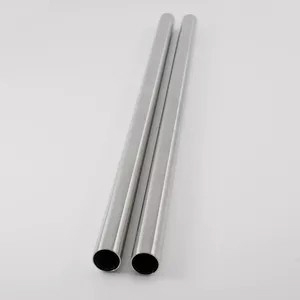
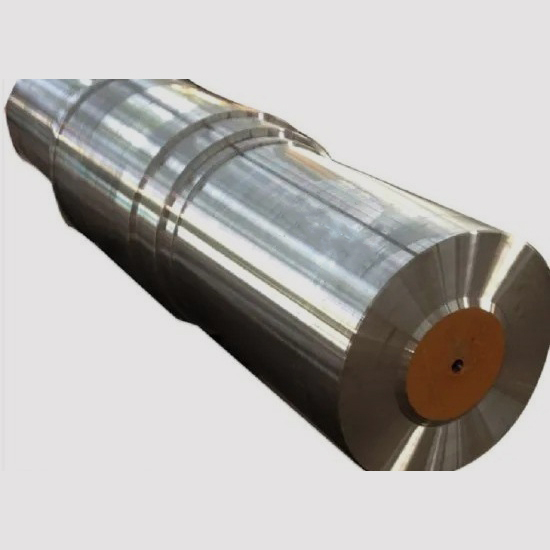
Forged steel round bars are produced by open-die or radial forging of a billet down to final diameter, as opposed to hot-rolled bars, which are reduced through a series of rolling mill passes. The distinction matters most in large diameters and high-stress applications: forged bars consolidate the original ingot structure more thoroughly, giving better center soundness and more uniform grain flow through the full cross-section — something rolling can struggle to achieve once bar diameter climbs above roughly 150–200mm.
This makes forged round bar the preferred starting stock for parts that will themselves be further forged, machined, or upset — shaft blanks, large pinions, pressure vessel components, and offshore/marine hardware where ultrasonic testing for internal soundness is a purchasing requirement.
Forged round bars are available in the same broad alloy range as other forged products — carbon, alloy, stainless (including SS430), and maraging grades like C300 — with diameter, length tolerance, and surface finish (black forged, rough-turned, or peeled/polished) specified to match the downstream machining process.
Forged Steel Products: Matching Geometry to Forging Method
Beyond round bar, forged steel products span a wide range of shapes, each suited to a particular forging method:
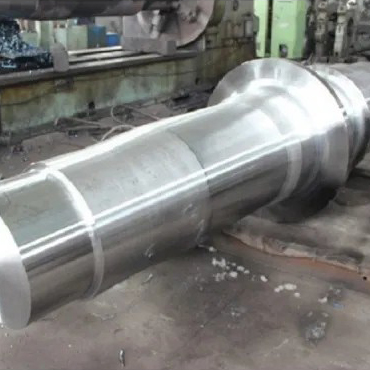
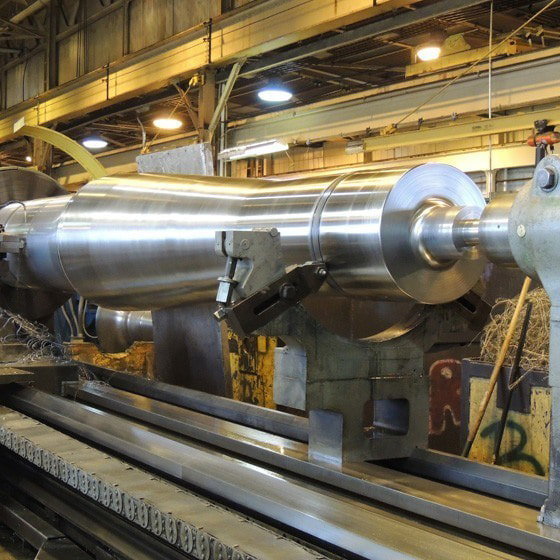
- Open-die forgings — shafts, rings, blocks, and custom large parts shaped between flat or simple dies; best for low-volume or oversized geometries.
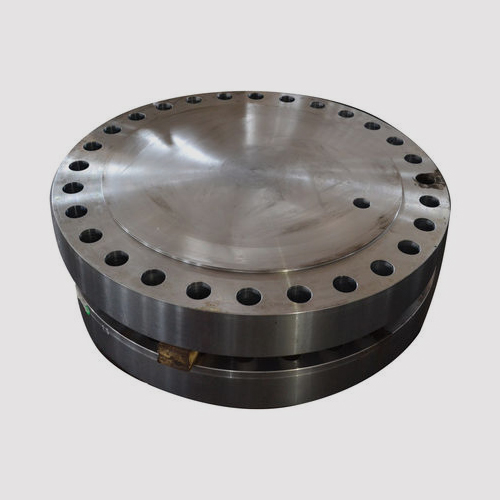
- Closed-die (impression-die) forgings — gears, flanges, connecting rods, and other near-net shapes produced in matched die cavities for high-volume runs.
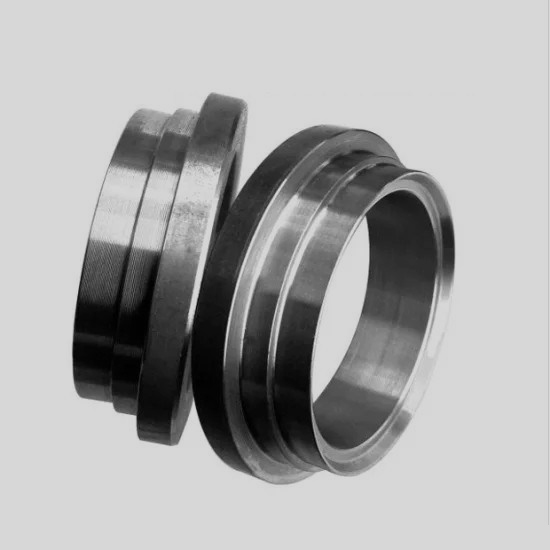
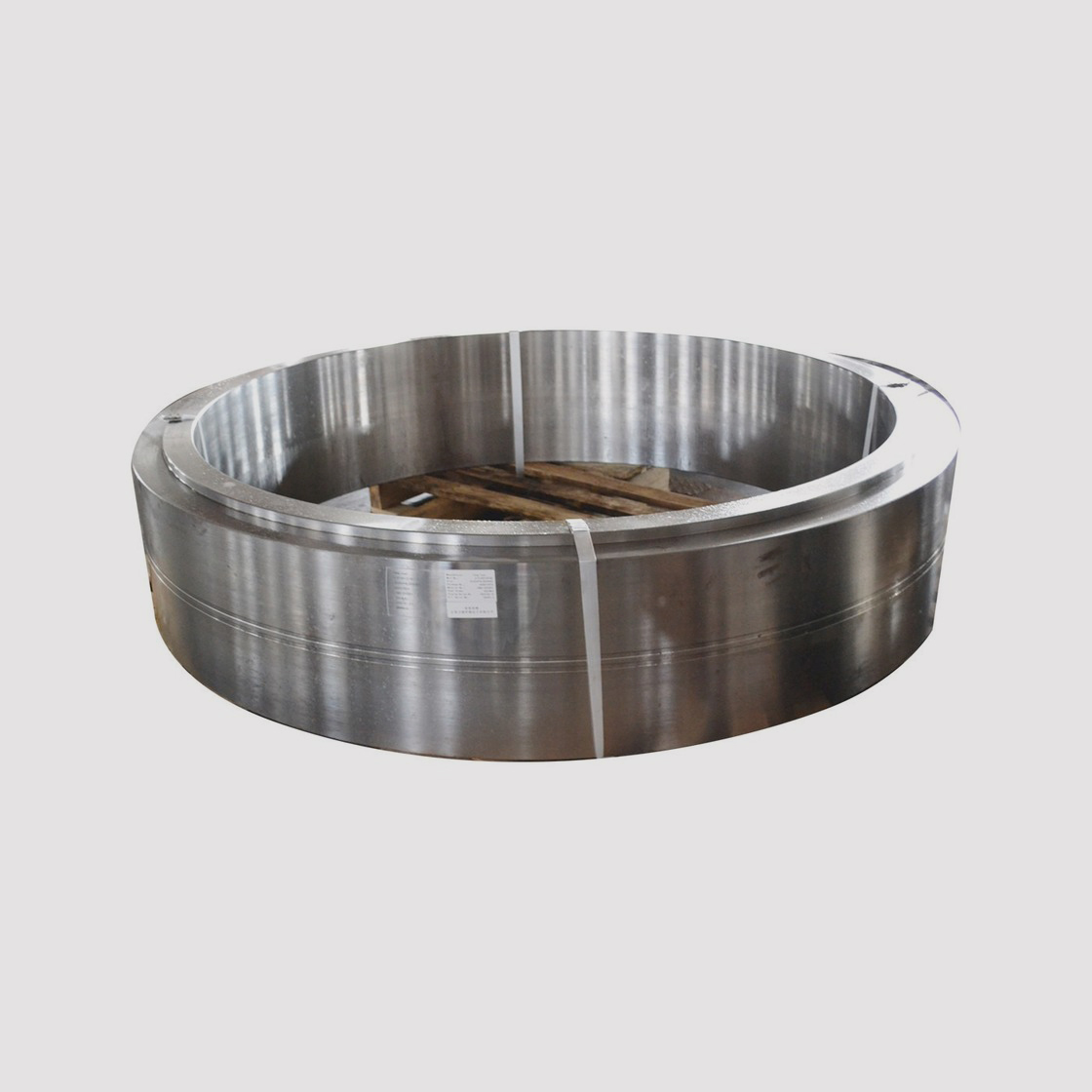
- Seamless rolled rings — bearing races, flanges, and gear blanks, formed by ring rolling a forged donut preform for a continuous circumferential grain flow.
- Upset forgings — bolt heads, valve stems, and other parts with a locally enlarged section formed by axial compression.
- Precision/near-net forgings — aerospace brackets and maraging steel components like C300 parts, forged close to final shape to minimize costly machining of high-alloy material.
FAQ
Is SS430 stronger than C300 maraging steel?
No. SS430 typically reaches tensile strengths around 450–620 MPa in the annealed or lightly work-hardened condition, while age-hardened C300 reaches roughly 1900–2050 MPa — more than three times higher. SS430 is chosen for corrosion resistance and cost, not peak strength.
Why can't SS430 be hardened by heat treatment like other stainless grades?
As a ferritic grade, SS430 doesn't undergo the austenite-to-martensite transformation that martensitic stainless steels (like 410 or 420) rely on for quench hardening. Its mechanical properties are set primarily by forging, annealing, and work hardening rather than heat treatment.
What happens if steel is forged below its minimum temperature?
Below the workable window, steel loses ductility and the forging load required to deform it rises sharply. The result is typically surface cracking, internal fissures, or outright fracture of the workpiece, along with accelerated die wear from the higher forming pressures involved.
Do forged steel round bars cost more than hot-rolled bars?
Generally yes, per kilogram, due to the additional processing step and tighter quality control. The premium is usually justified in large diameters or critical applications where internal soundness and grain flow uniformity reduce the risk of in-service failure.