

 English
 русский
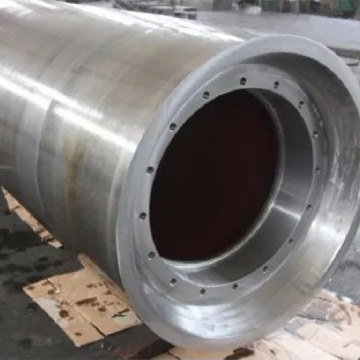
What Is Forged Alloy Steel
Forged alloy steel is steel that has been shaped through the application of compressive force — hammer blows or die pressing — at elevated temperatures, and whose composition includes deliberate additions of alloying elements beyond the basic iron-carbon formula. Common alloying additions include chromium, molybdenum, nickel, vanadium, and manganese, each contributing specific improvements to mechanical properties such as strength, toughness, hardenability, wear resistance, or corrosion resistance.
The forging process itself is as important as the alloy chemistry. When heated steel is worked under compressive force, the as-cast grain structure — which contains voids, dendritic segregation, and inclusions aligned in random orientations — is broken down and refined. The grains recrystallize into a finer, more uniform structure, and the material flow lines (also called grain flow) align with the shape of the forging. This oriented grain structure is the primary mechanical advantage of forged alloy steel over cast or machined-from-bar equivalents: forged parts resist fatigue cracking, impact loading, and stress in the directions where service loads are highest.
Forged alloy steel covers a wide range of material grades. Low-alloy steels such as AISI 4140 (chromium-molybdenum) and AISI 4340 (nickel-chromium-molybdenum) are workhorses in automotive, oil and gas, and heavy machinery applications. Higher-alloy tool steels, die steels, and stainless grades are also produced as forgings when the application demands the microstructural integrity that casting alone cannot reliably provide.
What Is ST 37 Steel
ST 37 is a structural steel designation from the former German DIN standard system, where "ST" indicates structural steel and "37" refers to the minimum tensile strength of 370 MPa. The grade is equivalent to S235 under the current EN 10025 European standard and broadly comparable to ASTM A36 in the US system, though precise equivalence depends on specific sub-grade and heat treatment condition.
ST 37 is a low-carbon, unalloyed structural steel. Its typical carbon content is below 0.17%, which gives it good weldability and formability but limits its strength relative to alloy or heat-treated grades. The yield strength is typically around 235 MPa and elongation at break around 26%, reflecting a material optimized for ductility and ease of fabrication rather than maximum load-bearing capacity.
Applications for ST 37 / S235 are primarily in general structural fabrication: building frames, bridges, support structures, machinery bases, and general engineering components where the loading is moderate and weldability is a priority. It is not a hardenable steel and is not typically used in applications requiring high fatigue resistance or surface hardness. When higher strength is needed, it is replaced by S355 (formerly ST 52) or by alloy grades such as 4140.
| Property | ST 37 / S235 | ST 52 / S355 | AISI 4140 (Q&T) |
|---|---|---|---|
| Tensile strength | 370–500 MPa | 470–630 MPa | 850–1,000 MPa |
| Yield strength | ~235 MPa | ~355 MPa | ~655 MPa |
| Carbon content | <0.17% | <0.24% | 0.38–0.43% |
| Weldability | Excellent | Good | Requires preheat |
| Typical use | General structures | Heavy structures | Shafts, gears, dies |
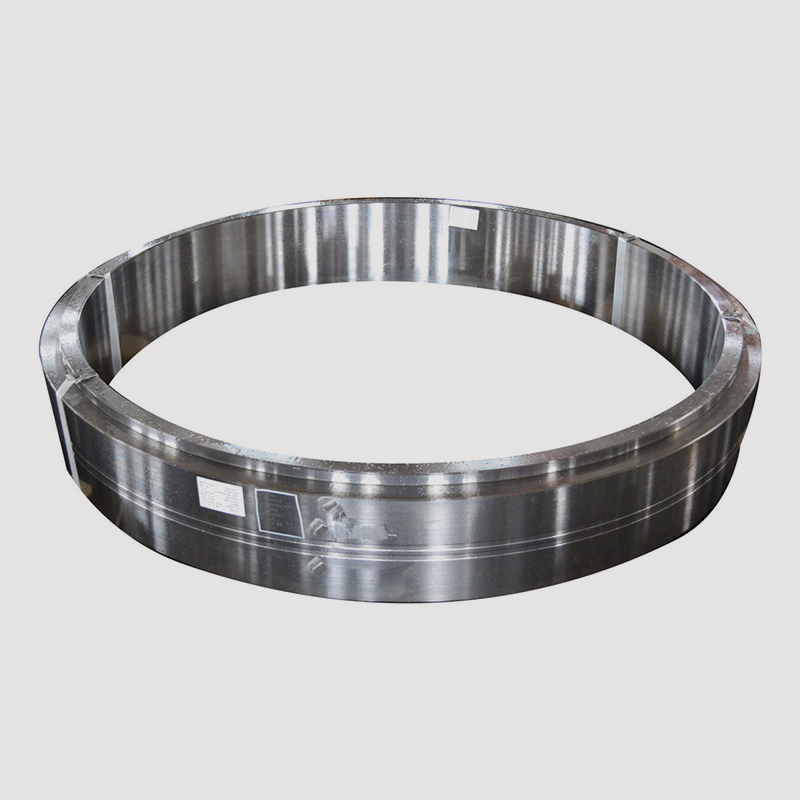
Forged Steel Rings: Process, Types, and Applications
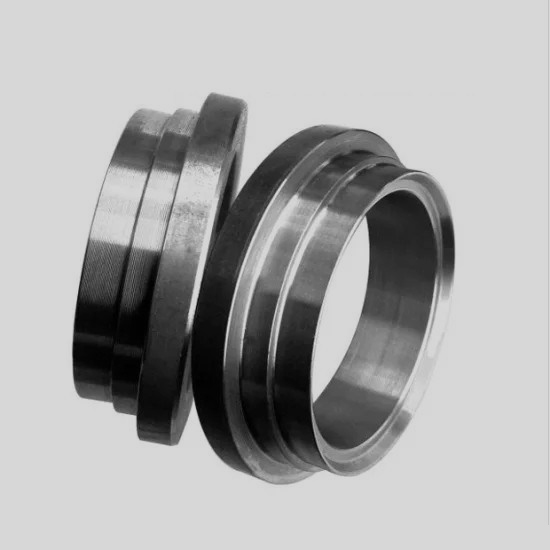
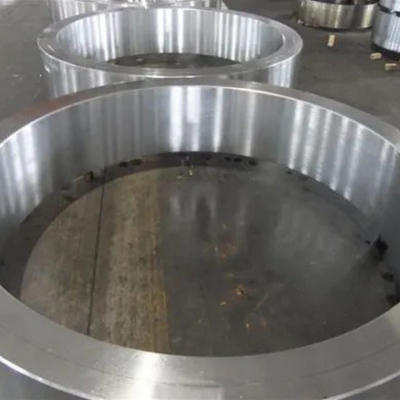
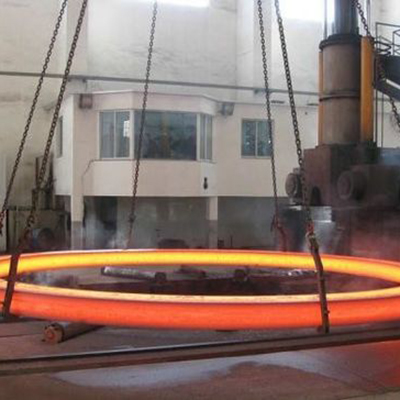
Forged steel rings are annular components produced through ring rolling — a specialized forging process in which a heated, pierced steel billet is placed on a mandrel and progressively rolled between the mandrel and a driven roll, reducing wall thickness and increasing diameter while maintaining a controlled cross-section profile. The process can produce rings ranging from a few centimeters to over 9 meters in diameter, depending on equipment capacity.
The ring rolling process produces a continuous, circumferential grain flow that follows the ring's geometry. This orientation is critical for performance: stresses in rotating machinery, pressure vessels, and bearing races act circumferentially, and the aligned grain structure resists these stresses more effectively than a ring cut from plate or bar, where grain flow runs in a fixed linear direction unrelated to the part geometry.
Types of Forged Steel Rings
Forged rings are produced in two primary cross-section categories:
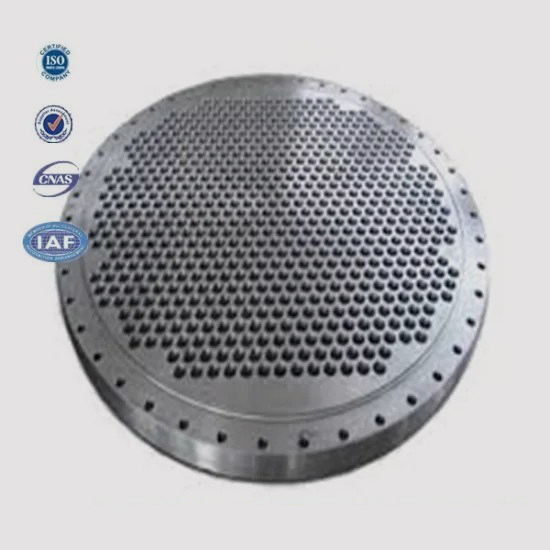
- Flat rings (rectangular cross-section): The most common type, used as flanges, gear blanks, bearing races, and structural rings. After ring rolling, flat rings are typically heat treated and then machined to final dimensions.
- Contour-rolled rings (profiled cross-section): Produced by using shaped mandrels and axial rolls to create a near-net-shape profile — flanges, steps, grooves, or tapers — during the rolling process itself. Contour rolling reduces the amount of machining required, minimizes material waste, and can improve grain flow through the critical section of the profile.
Common Steel Grades for Forged Rings
The material choice for a forged steel ring depends on the operating environment and mechanical requirements:
- Carbon steels (AISI 1045, 1020): Used for general-purpose flanges and structural rings where high alloy content is not required.
- Alloy steels (AISI 4140, 4340, 8620): Standard choices for rings subject to high stress, fatigue loading, or requiring through-hardening. Common in oil and gas, mining, and power generation equipment.
- Stainless steels (304, 316, 17-4 PH): Used where corrosion resistance is required — chemical processing, offshore, food and pharmaceutical equipment.
- Tool steels and bearing steels (52100, H13): Produced as forged rings for bearing races, die components, and high-wear applications requiring specific hardness profiles.
Where Forged Steel Rings Are Used
Forged steel rings appear in virtually every heavy industry sector where rotating, pressure-containing, or load-bearing annular components are required. Key application areas include:
- Wind turbines: Tower flanges, main shaft flanges, and pitch and yaw bearing rings. A single large wind turbine may contain more than 20 forged ring flanges. The fatigue life requirements for these components — designed for 20+ years of cyclic loading — make forged material the standard specification.
- Oil and gas: Wellhead flanges, pressure vessel nozzles, subsea connector rings, and pipeline flanges. Pressure ratings and material toughness at low temperatures (for arctic or deepwater applications) drive the selection of forged over cast components.
- Aerospace: Engine casings, turbine rings, and structural frames. Titanium and nickel superalloy rings are also ring-rolled for jet engine hot section components, following the same process principles as steel.
- Mining and heavy machinery: Slewing ring blanks, crusher components, and large gear blanks for excavators and mills.
- Nuclear power: Reactor pressure vessel rings and steam generator components, where material traceability, non-destructive testing, and controlled forging procedures are mandatory.
416 Stainless Steel Hardness: Properties and Practical Considerations
AISI 416 is a free-machining martensitic stainless steel — the most machinable of all stainless grades — achieved through the addition of sulfur (0.15% minimum) to the standard 12–13% chromium martensitic composition. The sulfur forms manganese sulfide inclusions that act as chip breakers during machining, dramatically reducing tool wear and cycle times compared to grades like 410 or 420. The tradeoff is reduced corrosion resistance and slightly lower toughness relative to sulfur-free martensitic grades.
Hardness in Annealed Condition
In the annealed (softened) condition, 416 stainless steel has a typical Brinell hardness of 185–200 HB, a tensile strength of approximately 515 MPa, and a yield strength around 275 MPa. This is the condition in which the material is most commonly supplied and machined — the sulfur addition makes it cut freely in the annealed state, and most precision components are machined before any heat treatment is applied.
Hardness After Heat Treatment
416 stainless is a hardenable grade. Through austenitizing at 925–1,010°C followed by oil quenching and tempering, the material can be brought to substantially higher hardness levels:
- Condition H900 equivalent (low tempering temperature, ~175°C): Achieves hardness up to 38–42 HRC (approximately 370–400 HB), tensile strength above 1,200 MPa.
- Mid-range tempering (400–500°C): Hardness of approximately 28–35 HRC, with improved toughness and better corrosion resistance than the high-hardness condition.
- High tempering temperature (600–650°C): Hardness falls to 22–26 HRC, maximizing ductility and toughness at the cost of strength. Used where impact resistance is more important than hardness.
The tempering temperature selection is critical because 416, like all martensitic stainless steels, is susceptible to temper embrittlement in the 425–595°C range. Tempering within this window produces a material with poor impact toughness despite acceptable hardness readings. This range should be avoided; tempering either below 200°C or above 600°C produces better overall mechanical performance.
Typical Applications of 416 Stainless Steel
The combination of machinability and hardenability makes 416 stainless steel the standard choice for high-volume, precision-machined components that require moderate corrosion resistance and a defined hardness level after heat treatment:
- Firearms components: Trigger groups, bolts, and action components where dimensional precision, hardness, and corrosion resistance are simultaneously required and machining volume is high.
- Screws, nuts, and bolts: Fasteners requiring corrosion resistance beyond carbon steel but produced on automatic screw machines where sulfur-enhanced machinability provides production efficiency.
- Pump shafts and valve stems: Applications requiring surface hardness, dimensional accuracy, and moderate resistance to mild corrosive media.
- Gears and bushings: Where wear resistance and hardness are needed in environments not severe enough to require more corrosion-resistant grades like 316 or duplex stainless.
One important limitation: 416's sulfur additions reduce its corrosion resistance compared to non-free-machining martensitic grades. It should not be specified for exposure to chloride-containing environments, acids, or prolonged immersion in water without protective coating. Where higher corrosion resistance is needed in a free-machining stainless grade, 303 (austenitic) is the common alternative — though it cannot be hardened by heat treatment.