

 English
 русский
Forging of Steel: Process Fundamentals and Why It Matters
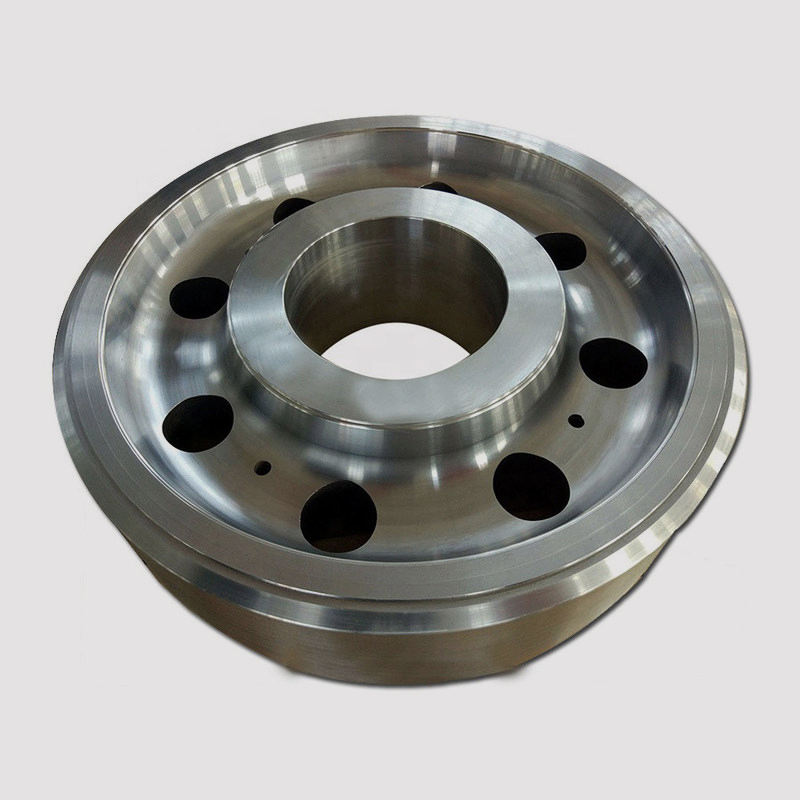
Steel forging is a manufacturing process in which a steel workpiece is shaped under compressive force — either by hammer, press, or roll — at elevated temperature or, for certain grades, at room temperature (cold forging). The defining metallurgical outcome is grain refinement and directional alignment: the austenitic grain structure of the heated steel is broken down and elongated along the direction of force, producing a denser, more homogeneous material than casting can achieve.
The three principal forging methods and their applications:
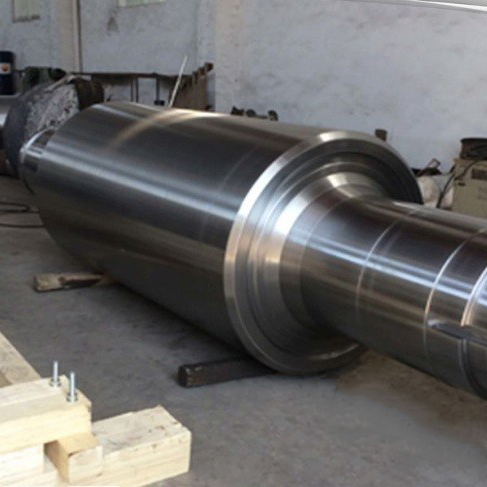
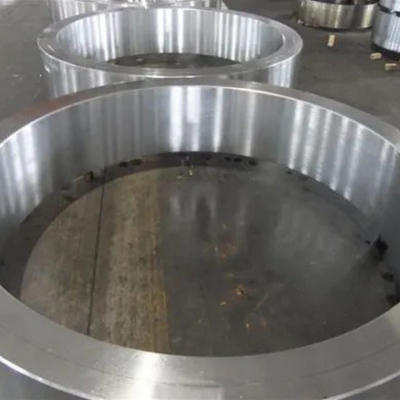
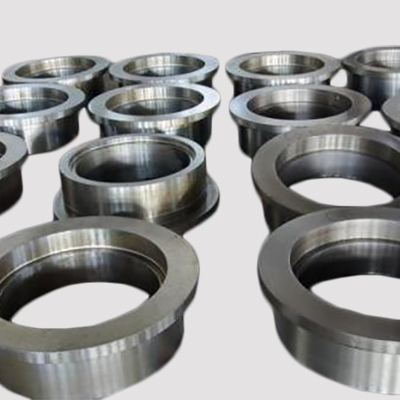
- Open-die forging (free forging): The workpiece is compressed between flat or simple-contour dies without full enclosure. Used for large-section components — shafts, discs, cylinders — where tight dimensional tolerances are secondary to mechanical property development. Typical products: pressure vessel flanges, large-diameter forged bars, turbine rotors.
- Closed-die forging (impression-die forging): The workpiece is fully enclosed in a die cavity, forcing material to fill the die shape precisely. Produces near-net-shape parts with tighter tolerances and excellent surface finish. Typical products: connecting rods, valve bodies, gear blanks.
- Roll forging: The workpiece passes between contoured rolls that reduce cross-section and increase length. Used for tapered sections, axles, and leaf springs where uniform elongation is the objective.
The grain flow produced by forging — often called "fiber structure" — follows the contour of the finished part rather than running arbitrarily as in castings. This orientation increases fatigue strength by 20–30% and impact toughness by 30–50% compared to equivalent cast steel, which explains why forged components are specified wherever cyclic loading, impact, or pressure service are involved.
Steel Forging Temperature: Ranges by Grade and Phase
Forging temperature is the single most critical process variable in steel forging — working above or below the optimal range produces microstructural defects that heat treatment cannot fully correct. The target temperature must maintain the steel in the austenitic phase (fully recrystallized, low flow stress) while avoiding incipient melting at the upper limit and incomplete deformation at the lower.
| Steel Category | Forging Start Temp (°C) | Forging Finish Temp (°C) | Notes |
|---|---|---|---|
| Low carbon steel (<0.3% C) | 1,200–1,280 | 850–900 | Wide working window, forgiving process |
| Medium carbon steel (0.3–0.6% C) | 1,150–1,250 | 800–850 | Risk of cracking if finish temp too low |
| Alloy steel (Cr-Mo, Ni-Cr-Mo) | 1,100–1,200 | 850–950 | Controlled cooling post-forge essential |
| Austenitic stainless (304, 316, 310) | 1,150–1,260 | 950–1,000 | Rapid cooling to avoid sensitization |
| Martensitic stainless (410, 416) | 1,100–1,200 | 870–950 | Slow cool or anneal immediately after |
| Maraging steel (250, 300) | 1,100–1,200 | 900–950 | Air cool; age harden post-forge |
Working below the minimum finish temperature causes strain hardening without recrystallization — the forged part develops residual stress, distorted grain boundaries, and reduced ductility. For alloy and stainless grades, this is particularly consequential because the higher alloying content raises the recrystallization temperature, leaving a narrower safe working window than low-carbon steels.
Alloy Steel Forgings and F22: Composition, Properties, and Applications
Alloy steel forgings are produced from steels containing deliberate additions of chromium, molybdenum, nickel, vanadium, or manganese to achieve mechanical properties unattainable in plain carbon steel. These additions alter hardenability, high-temperature strength, toughness, and corrosion resistance — with each element contributing a specific effect to the final alloy balance.
ASTM A182 F22 (also designated UNS K21590, 2¼Cr–1Mo) is one of the most widely specified alloy steel forging grades in pressure vessel and piping applications. Its nominal composition — 2.0–2.5% chromium, 0.87–1.13% molybdenum, balance iron — delivers exceptional creep resistance and oxidation resistance at elevated temperatures, with a maximum service temperature of approximately 600°C (1,112°F) for sustained pressure service.
Key mechanical properties of F22 in the normalized-and-tempered condition:
- Tensile strength: 415 MPa minimum
- Yield strength (0.2% offset): 205 MPa minimum
- Charpy impact toughness: 54 J minimum at room temperature
- Hardness: 156–207 HBW depending on heat treatment
F22 forgings are the standard material for flanges, fittings, and valves in refineries, petrochemical plants, and power generation systems — specifically in hydrogen service and catalytic reforming units where hydrogen embrittlement resistance and elevated temperature strength are simultaneously required. Post-weld heat treatment (PWHT) at 690–760°C is mandatory for all welded F22 assemblies to relieve residual stress and restore toughness.
Other common alloy steel forging grades by application:
- F11 (1¼Cr–½Mo): Lower-cost alternative to F22 for moderate-temperature service up to ~540°C.
- F91 (9Cr–1Mo–V): Advanced creep-resistant grade for ultra-supercritical power generation above 600°C.
- 4140 / 42CrMo4: General-purpose Cr-Mo alloy for shafts, gears, and structural forgings requiring high tensile strength with moderate toughness.
- 4340 / 36CrNiMo4: High-nickel Cr-Mo grade for aerospace and defense forgings requiring deep hardenability and very high strength-to-weight ratio.
Carbon Steel Forged: Grades, Bar Products, and Specific Heat
Carbon steel forgings cover the broadest application range in industrial manufacturing — from structural components and tooling to pressure parts and shafting. Carbon content is the primary lever controlling hardness, strength, and machinability, while forging refines the microstructure regardless of the carbon level.
Carbon steel classifications by carbon content:
- Low carbon (0.05–0.30% C): High ductility, easily forged and welded. Used for structural forgings, chain links, and parts requiring significant plastic deformation. Representative grades: 1018, 1020, A105.
- Medium carbon (0.30–0.60% C): Balanced strength and toughness. Heat treatable to high hardness. Used for shafts, crankshafts, rails, and large gears. Representative grades: 1040, 1045, 1050.
- High carbon (0.60–1.00% C): High hardness and wear resistance; lower ductility and weldability. Used for springs, cutting edges, and wear parts. Representative grades: 1070, 1080, 1095.
Forged Steel Bar: Specifications and Use Cases
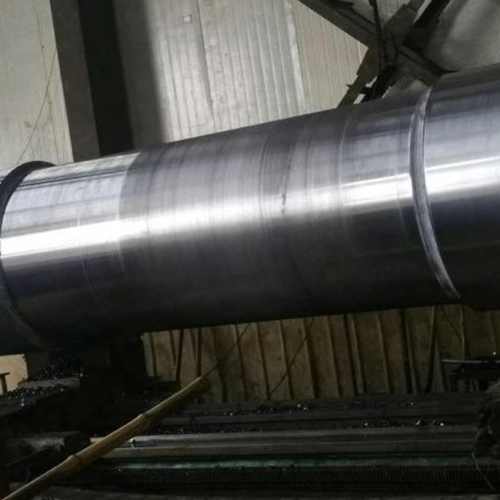
Forged steel bar (also termed "forged round bar" or "forged billet") is produced by open-die forging of a cast ingot, then machining or rolling to a target diameter. The forging operation eliminates the porosity, segregation, and coarse dendritic structure of the original ingot — producing a bar with consistent mechanical properties through the full cross-section, unlike hot-rolled bar where the core may retain some casting defects in larger diameters.
Forged steel bar is specified over hot-rolled bar when:
- Diameter exceeds 150 mm (6 inches), where hot-rolling alone cannot guarantee core properties.
- Ultrasonic inspection (UT) to ASTM A388 or equivalent is required — forged bar achieves cleaner UT results than rolled bar at equivalent diameters.
- The application involves heavy cyclic loading, impact service, or rotating fatigue (shafts, rolls, tooling).
Specific Heat of Carbon Steel
The specific heat of carbon steel — the energy required to raise 1 kg of material by 1°C — averages approximately 490–500 J/(kg·K) at room temperature for low-to-medium carbon grades. This value increases with temperature, reaching approximately 560–580 J/(kg·K) at 500°C and peaking near the Curie temperature (~770°C) before dropping sharply above the ferrite-to-austenite transformation.
Practical implications of specific heat in forging and heat treatment:
- Furnace sizing: Energy input to heat a forging billet to temperature scales directly with mass × specific heat × temperature rise. A 1,000 kg steel billet heated from 20°C to 1,200°C requires approximately 575 MJ minimum, before accounting for furnace efficiency losses.
- Quench bath design: The heat extraction rate during quenching must exceed the release of stored thermal energy; specific heat at temperature governs the total energy the quench medium must absorb.
- Thermal gradient management: In large-section forgings, differential specific heat across the temperature range creates uneven cooling rates between surface and core — a primary driver of quench cracking in high-carbon and alloy grades.
Weight Steel Bar Calculator: How to Estimate Bar Mass
Steel bar weight is calculated from geometry and density. For a round bar:
Weight (kg) = (π / 4) × D² × L × ρ
Where D = diameter in meters, L = length in meters, and ρ = density in kg/m³. For carbon and low-alloy steel, ρ = 7,850 kg/m³ is the standard value used in most engineering calculations. Stainless steels run slightly higher: 7,900–7,980 kg/m³ depending on grade.
Simplified rule of thumb widely used in procurement: a 25 mm diameter carbon steel round bar weighs approximately 3.85 kg/m. Weight scales with the square of diameter — doubling the diameter quadruples the weight per meter. A 50 mm bar weighs approximately 15.4 kg/m; a 100 mm bar approximately 61.7 kg/m.
Cast Steel vs. Forged Steel: Which to Specify and When
The cast vs. forged decision is one of the most practically significant choices in component specification — and it is frequently oversimplified to "forged is stronger." The correct answer depends on geometry complexity, section size, production volume, and the specific failure mode the application must resist.
| Property / Factor | Forged Steel | Cast Steel |
|---|---|---|
| Tensile strength | Higher (refined grain structure) | Moderate (coarser grain, possible porosity) |
| Impact toughness | Significantly higher | Lower; brittle fracture risk in heavy sections |
| Geometric complexity | Limited; re-entrant angles and undercuts difficult | Virtually unlimited; complex internal cavities achievable |
| Tooling cost | High (die fabrication) | Moderate (pattern and mold) |
| Material utilization | 80–95% (near-net-shape closed die) | Near 100% (no flash or scale loss) |
| Best application fit | High-stress, fatigue-critical, impact-loaded parts | Complex geometry, moderate stress, large housings |
The geometry constraint is the most decisive factor in practice. A pump impeller with complex internal vanes, a valve body with intricate internal flow passages, or a large gear housing with integral ribbing — all of these are economically and technically impractical to forge, and casting is the correct process. Conversely, a pressure flange, a crane hook, an automotive crankshaft, or a drill bit shank — axially loaded, cyclically stressed, with limited geometric complexity — are natural forging candidates where the directional grain structure delivers its full benefit.
Stainless Steel Grades: 310, 410, 416, and Shaft Selection
Stainless steel grades span four primary families — austenitic, martensitic, ferritic, and duplex — each with distinct alloying strategies and performance profiles. Selecting the correct grade requires balancing corrosion resistance, mechanical strength, machinability, and heat resistance simultaneously.
Stainless Steel 310: High-Temperature Austenitic Grade
Grade 310 is an austenitic stainless steel containing 24–26% chromium and 19–22% nickel — significantly higher alloying content than the common 304/316 family. This composition delivers exceptional resistance to oxidation and sulfidation at elevated temperatures, with a continuous service limit of 1,050°C (1,922°F) and an intermittent service limit of 1,150°C.
310 is not primarily a structural grade — its tensile strength (515 MPa minimum, annealed) is comparable to 304, and it is considerably more expensive. Its application domain is purely thermal: furnace components, radiant tubes, kiln furniture, thermal processing baskets, and heat treatment fixtures where standard austenitic grades would suffer rapid oxidation scaling above 800°C.
What Is 410 Stainless Steel?
Grade 410 is the most widely used martensitic stainless steel, containing approximately 11.5–13.5% chromium with low carbon (0.15% max) and no significant nickel addition. Unlike austenitic grades, 410 is hardenable by heat treatment — quenching from 980–1,040°C followed by tempering can produce tensile strengths from 485 MPa (annealed) up to 1,240 MPa (hardened and low-temper), a range wider than most engineering steels.
The chromium content provides moderate corrosion resistance — adequate for mild corrosive environments, fresh water, and atmospheric exposure, but significantly inferior to 304 or 316 in chloride-containing, acidic, or marine environments. The tradeoff is the ability to achieve hardness that austenitic grades cannot: 410 at full hardness reaches 40–45 HRC, making it suitable for cutlery, valve trim, pump shafts in mildly corrosive media, and fasteners requiring both corrosion resistance and strength.
Hardness of 416 Stainless Steel
Grade 416 is a free-machining variant of 410, produced by adding 0.15% minimum sulfur (occasionally selenium) to improve machinability. The sulfur forms manganese sulfide inclusions that act as chip-breakers, increasing machining rates by 40–50% compared to 410 — a significant productivity advantage for high-volume turned parts.
Hardness values for 416 stainless steel by condition:
- Annealed: 155–185 HBW (approximately 82–91 HRB)
- Hardened (oil quench from 980°C): 400–450 HBW (approximately 42–47 HRC)
- Hardened and tempered at 200°C: 375–425 HBW (approximately 39–45 HRC)
- Hardened and tempered at 600°C: 230–280 HBW (approximately 22–28 HRC) — maximum corrosion resistance in heat-treated condition
The sulfur addition in 416 slightly reduces corrosion resistance and toughness compared to 410 — a tradeoff acceptable for most shaft, stud, and connector applications but disqualifying for components requiring full 410 impact toughness or maximum pitting resistance.
Stainless Steel Shaft Material Selection
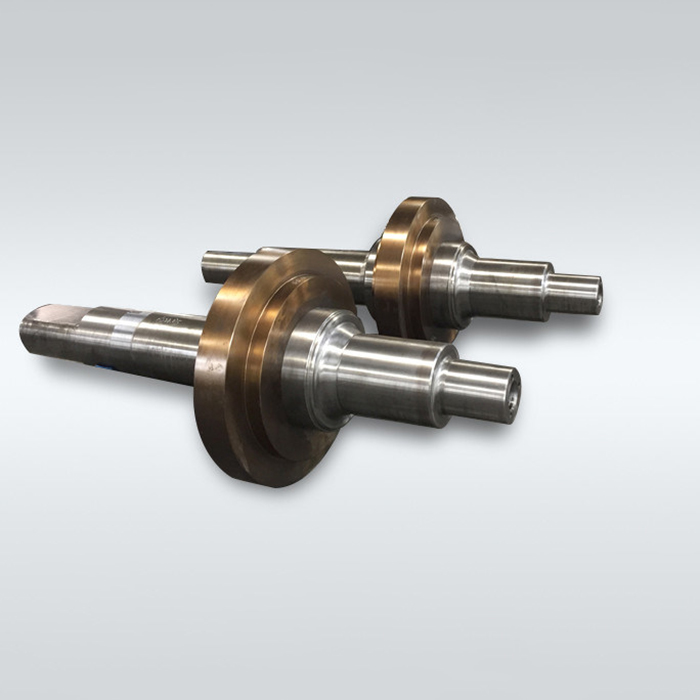
Shaft material selection in stainless steel involves balancing four competing requirements: corrosion resistance, fatigue strength, machinability, and cost. The most common grades used for stainless shafts and their characteristic tradeoffs:
- 416 (martensitic, free-machining): Best machinability in the group; moderate corrosion resistance; hardenable for wear-surface applications. Preferred for high-volume machined shafts in mildly corrosive environments.
- 17-4 PH (precipitation hardening): Tensile strength up to 1,310 MPa at H900 condition; excellent fatigue life; moderate corrosion resistance (comparable to 304). The preferred grade for high-performance pump and turbine shafts where strength-to-weight is critical.
- 316L (austenitic): Superior corrosion resistance including chloride service; cannot be hardened by heat treatment; fatigue strength lower than martensitic or PH grades. Used for shafts in chemical process, pharmaceutical, and marine applications where corrosion environment overrides strength requirements.
- Nitronic 50 (austenitic, nitrogen-strengthened): See dedicated section below.
Maraging 300 Steel: Ultra-High Strength Without Carbon
Maraging steels are a family of ultra-high-strength alloys that derive their strength from precipitation hardening of an iron-nickel martensite matrix — not from carbon content. "Maraging" combines "martensite" and "aging," describing the two-step process: solution anneal to produce soft martensite, then age at 480–500°C to precipitate intermetallic compounds (Ni₃Mo, Ni₃Ti, Fe₂Mo) that block dislocation movement and dramatically increase strength.
Maraging 300 (also designated 18Ni 300) has a nominal composition of 18% nickel, 9% cobalt, 5% molybdenum, 0.7% titanium, with carbon held below 0.03% — a remarkably low carbon level that makes the alloy highly weldable despite its extreme strength.
Key properties of maraging 300 steel in the peak-aged condition:
- Tensile strength: 1,965–2,070 MPa
- Yield strength (0.2%): 1,896–2,000 MPa
- Fracture toughness (K₁c): 55–80 MPa√m — significantly higher than conventional ultra-high-strength steels at equivalent strength
- Hardness: 54–58 HRC (aged)
- Dimensional stability: Extremely low distortion on aging (≈0.05% linear expansion) — enabling finish machining before aging with predictable final dimensions
Primary applications: aerospace structural components (bulkheads, landing gear), rocket motor cases, ultra-high-pressure tooling, and precision injection mold tooling where dimensional stability and very high strength are simultaneously required. The cobalt content makes maraging 300 considerably more expensive than conventional alloy steels — typically 10–20× the cost of 4340 on a per-kilogram basis.
Nitronic 50 Stainless Steel: High-Strength Austenitic for Demanding Shaft and Fastener Service
Nitronic 50 (ASTM designation XM-19, UNS S20910) is a nitrogen-strengthened austenitic stainless steel developed specifically to address the key limitation of standard austenitic grades: insufficient strength for shaft and fastener applications without sacrificing corrosion resistance.
Its nominal composition — 22% chromium, 13% nickel, 5% manganese, 2.5% molybdenum, 0.30% nitrogen — delivers corrosion resistance comparable to or exceeding 316L, while achieving yield strength approximately twice that of 316L in the annealed condition (380–450 MPa vs. 170–205 MPa for 316L). Cold drawing can increase yield strength further to 690–900 MPa without heat treatment.
Properties that make Nitronic 50 the preferred stainless shaft material in demanding applications:
- Pitting resistance equivalent number (PREN): 38–42 — significantly higher than 316L (PREN ~24) and adequate for seawater and many chloride-containing process environments.
- Galling resistance: Nitronic 50 exhibits markedly better resistance to adhesive wear and galling than 316 or 17-4 PH in metal-to-metal contact — a critical advantage for pump shafts running in stainless bushings or bearings.
- Cryogenic toughness: Retains excellent impact toughness to −196°C (liquid nitrogen temperature), making it suitable for cryogenic pump and valve shafting.
- Non-magnetic: Fully austenitic and non-magnetic in both annealed and cold-worked conditions — required for certain marine, medical, and electronic applications.
Typical applications include marine pump shafts, offshore fasteners, subsea valve stems, and food processing shafting where both seawater corrosion resistance and higher strength than 316L are required. Nitronic 50 is specified by NACE MR0175 for H₂S service and is widely used in oil and gas downhole tooling.
Stainless Steel Block and Socket Weld Pipe Fittings
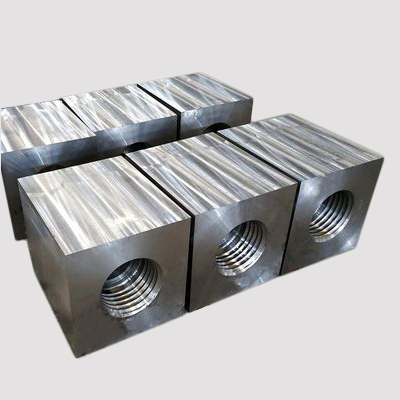
A stainless steel block — also referred to as a manifold block, valve block, or hydraulic block — is a machined solid-stainless body with drilled internal flow passages, tapped ports, and mounting features that consolidate multiple valves, fittings, or instruments into a single compact unit. Blocks replace assemblies of individual fittings and tube sections, eliminating potential leak points and reducing system footprint significantly in hydraulic, instrumentation, and chemical injection systems.
Common block materials are 316L stainless (general process service, moderate corrosion environments) and duplex 2205 (high-chloride and high-pressure offshore service). Blocks are typically machined from forged or hot-rolled bar rather than cast plate, ensuring dense, defect-free material throughout the pressure-containing walls.
Stainless Steel Socket Weld Pipe Fittings
Socket weld (SW) fittings accept pipe into a recessed socket and are joined by a fillet weld around the socket mouth. They are manufactured to ASME B16.11 and are available in Class 3000, 6000, and 9000 pressure ratings, covering service pressures up to 10,000+ psi depending on pipe size and temperature.
Stainless socket weld fittings are most commonly produced in:
- 304/304L: General corrosive service, water, steam lines. Dual-certified 304/304L is standard for most piping systems.
- 316/316L: Chloride environments, chemical process, pharmaceutical, and marine service. Molybdenum addition (2–3%) significantly improves pitting resistance over 304.
- Duplex 2205 / Super duplex 2507: High-pressure, high-chloride offshore service; seawater injection systems.
A key installation requirement often overlooked: ASME B31.3 mandates a 1/16-inch (1.6 mm) gap between the pipe end and the socket shoulder before welding, to accommodate thermal expansion during the weld cycle and prevent residual stress concentration at the pipe-socket interface. Fittings assembled without this gap have higher rates of fatigue cracking at the socket root in cyclic service — a detail that explains field failures in many otherwise correctly-specified stainless piping systems.