

 English
 русский
How Steel Is Forged: Process, Temperature, and Material Fundamentals
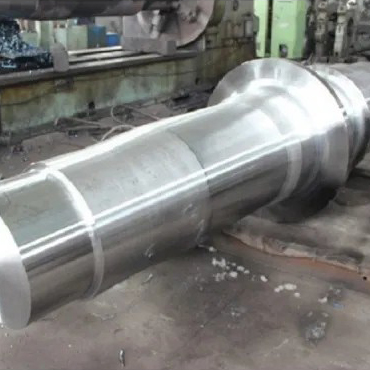
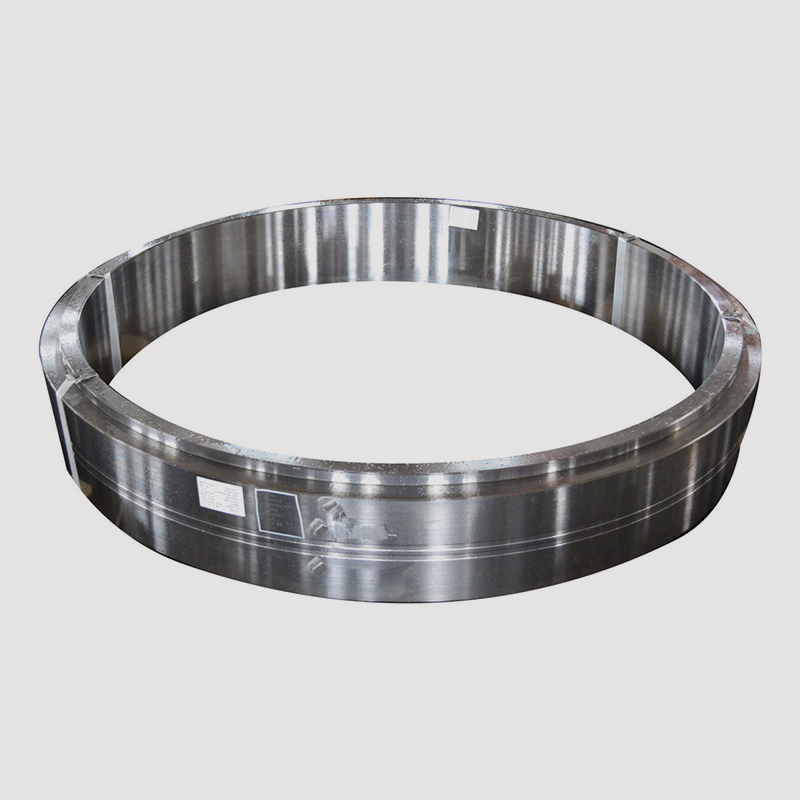
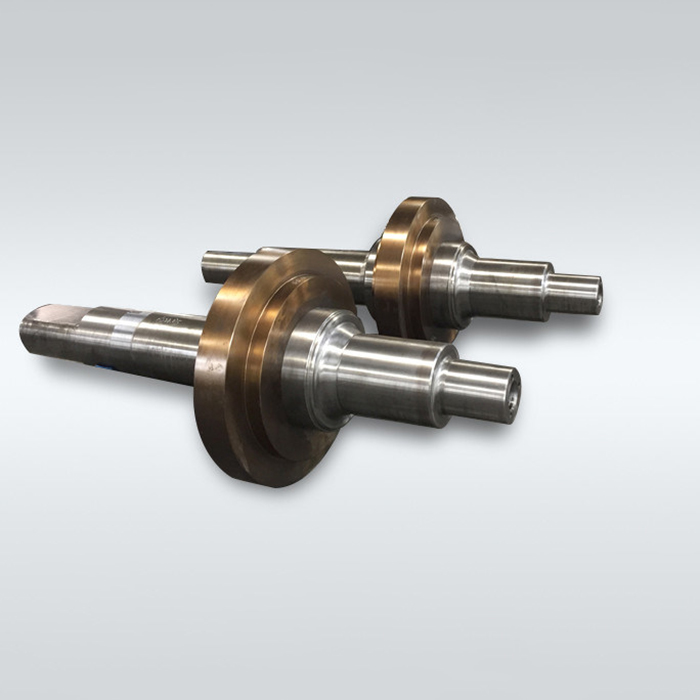
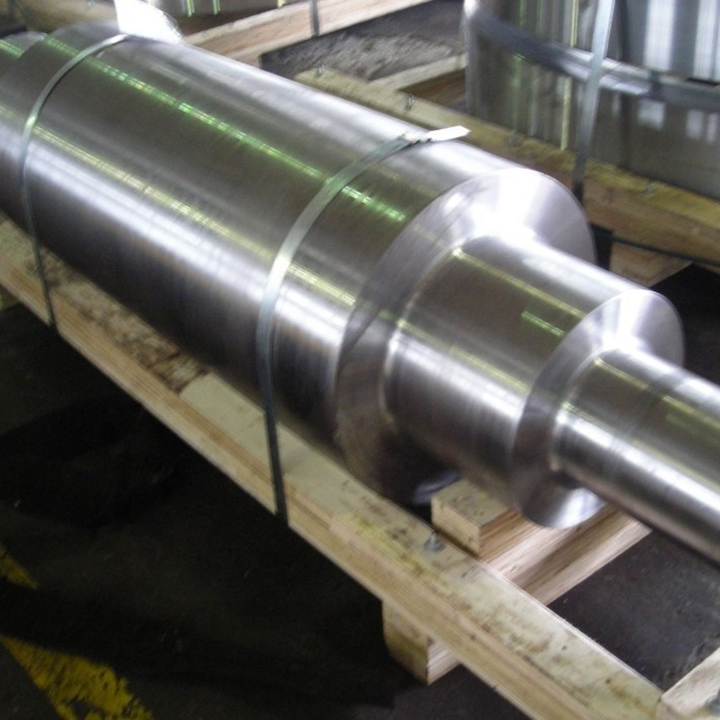
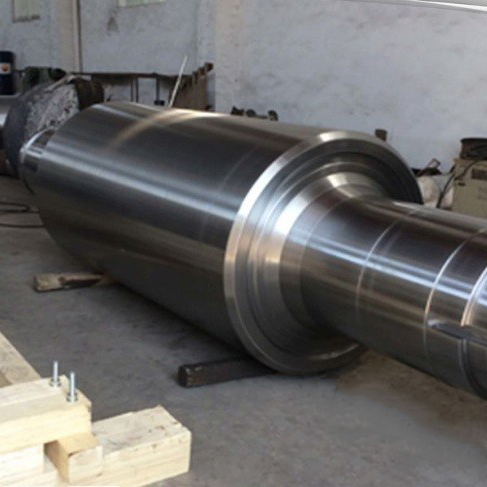
Steel forging is a manufacturing process in which heated steel is shaped under compressive force — either through hammering, pressing, or rolling — to produce components with superior mechanical properties compared to cast or machined equivalents. The forging process aligns the steel's internal grain structure along the contours of the finished part, resulting in enhanced tensile strength, fatigue resistance, and impact toughness that cannot be replicated by casting alone.
Steel forging temperature is one of the most critical process variables. Most carbon and alloy steels are forged in the range of 1,100°C to 1,250°C (2,010°F to 2,280°F) — above the recrystallization threshold where the metal is plastic enough to flow under pressure without cracking. Stainless steels require slightly lower forging temperatures, typically 950°C to 1,150°C, due to their higher alloy content and reduced thermal conductivity. Forging below the minimum temperature introduces internal stress and surface cracking; exceeding the maximum causes grain growth that weakens the final part.
The forging sequence follows a consistent pattern regardless of part geometry: the billet is heated to forging temperature in a furnace, transferred rapidly to the die or anvil, shaped under force while temperature is maintained within the working range, and then cooled under controlled conditions — either air-cooled, normalized, or quenched depending on the alloy and required mechanical properties.
Two primary categories of steel are used in forging operations: carbon steel, valued for its workability and cost efficiency, and stainless steel, selected where corrosion resistance, elevated-temperature performance, or hygienic surface finish is required alongside structural strength.
Forged Steel vs. Cast Steel: Key Differences in Structure and Performance
The forged vs. cast steel distinction matters significantly in engineering and procurement decisions. Both processes start with the same raw material, but the resulting microstructure — and therefore the mechanical properties — differ in ways that directly affect component performance and service life.
Cast steel is produced by pouring molten metal into a mold and allowing it to solidify. The cooling process creates a randomly oriented grain structure with the potential for internal porosity, shrinkage voids, and dendritic segregation — microscopic inconsistencies that create stress concentration points under load. Cast components can achieve complex geometries that forging cannot, making casting the preferred process for large housings, valve bodies, and intricate shapes where directional loading is not a primary concern.
Forged steel eliminates most of these internal defects. The compressive force applied during forging closes any voids in the billet and orients the grain flow along the part's stress lines. The result is a component with 15 to 25% higher tensile strength, significantly better fatigue life, and superior impact resistance compared to an equivalent cast part of the same alloy. This is why forged steel is the standard for shafts, gears, connecting rods, structural fasteners, and components subjected to cyclic or impact loading.
| Property | Forged Steel | Cast Steel |
|---|---|---|
| Grain structure | Aligned, continuous | Random, dendritic |
| Internal porosity | Minimal to none | Possible; process-dependent |
| Tensile strength | Higher | Moderate |
| Fatigue resistance | Excellent | Good |
| Design complexity | Limited by die geometry | Very high |
| Tooling cost | High (die fabrication) | Moderate |
| Best application | Structural, dynamic loading | Complex geometry, static load |
Carbon Steel Forging: Materials, Carbon Content, and Hardness
Carbon is the primary alloying element in steel and the dominant variable controlling hardness, strength, and weldability. In forging applications, carbon forged steel is categorized by carbon content into three practical grades:
- Low carbon steel (0.05% – 0.30% C): Highly malleable at forging temperature, excellent toughness in the finished state, but limited hardness potential. Used for structural components, shafts, and flanges where toughness outweighs hardness requirements.
- Medium carbon steel (0.30% – 0.60% C): The most widely used range in industrial forging. Responds well to heat treatment, achieving a balance of tensile strength (typically 600 to 900 MPa) and ductility. Commonly specified for axles, crankshafts, gears, and connecting rods.
- High carbon steel (0.60% – 1.00% C): Maximum hardness potential after quench and temper, but reduced toughness and weldability. Used for springs, rail components, cutting edges, and wear-resistant applications.
Adding carbon to steel occurs during primary steelmaking — either through the basic oxygen furnace (BOF) or electric arc furnace (EAF) process — by controlling the carbon content of the charge material and adjusting with carbon additives (coke or graphite electrodes) during refining. Once steel is cast into billets, the carbon content is fixed; carbon cannot be meaningfully added during downstream forging operations. Surface carburizing (case hardening) can increase surface carbon content post-forging, but this is a heat treatment process, not a compositional change to the bulk material.
Steel hardness (HRC) — measured on the Rockwell C scale — is directly related to carbon content and heat treatment. Annealed medium carbon steel typically measures 15 to 25 HRC. After quench and temper, the same steel can achieve 40 to 55 HRC depending on section thickness and quench rate. Tool steel forgings optimized for wear resistance commonly target 58 to 65 HRC in the finished condition.
Stainless Steel Grades for Forging: 410, 416, and 420
Martensitic stainless steels — particularly the 400-series grades — are the dominant stainless alloys used in forging operations. They combine meaningful corrosion resistance with the ability to be heat treated to high hardness levels, making them suitable for a wide range of structural, mechanical, and tooling applications.
410 stainless steel is the foundational grade of the martensitic family, containing approximately 11.5 to 13.5% chromium and 0.15% maximum carbon. It offers moderate corrosion resistance, good mechanical strength, and excellent forgeability. 410 stainless steel round bar is widely produced for shafts, fasteners, valve stems, and pump components. In the annealed condition, 410 is readily machined; after hardening and tempering, it achieves tensile strengths of 700 to 1,000 MPa and hardness values of 25 to 35 HRC depending on temper temperature.
416 stainless steel is a free-machining variant of 410, with sulfur added (0.15% minimum) to improve machinability by up to 85% compared to 410. The 416 stainless steel material properties are otherwise similar to 410, but the sulfur addition slightly reduces corrosion resistance and transverse ductility — making 416 the preferred choice when high-volume CNC turning or screw machine production follows forging, rather than for applications requiring maximum corrosion performance.
420 stainless steel contains higher carbon (0.15% minimum, typically 0.26 to 0.40%) than 410, which significantly increases its hardness potential after heat treatment. 420 stainless steel plate and bar are used where wear resistance, edge retention, and moderate corrosion resistance must coexist — cutlery, surgical instruments, molds, and plastic injection tooling are primary applications. Fully hardened 420 achieves 50 to 55 HRC, making it one of the hardest stainless grades available in standard production forms.
Stainless Steel Stock Forms: Shafts, Round Bar, and Blocks
Stainless steel is supplied in several standard stock forms that serve as starting material for forging, machining, or direct fabrication. Understanding the differences between these forms helps engineers and procurement teams specify the correct material efficiently.
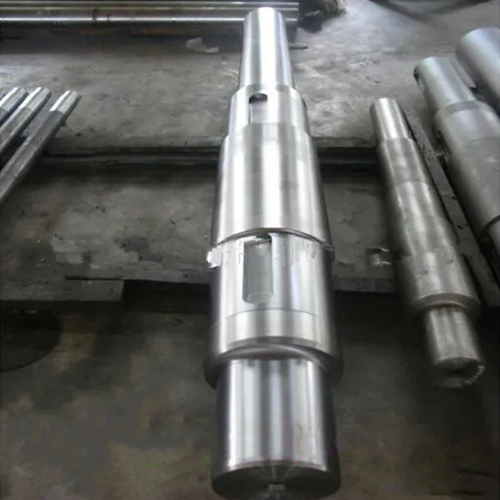
Stainless steel shafts are precision-ground round bar products supplied to tight diameter tolerances (typically h6 or h9 tolerance class), with surface finish and straightness optimized for direct use in rotating assemblies, linear motion systems, and drive applications. Unlike hot-rolled bar, precision shaft stock requires no additional turning to achieve bearing-fit dimensions.
Stainless steel round bar (hot-rolled or cold-drawn) is the standard feedstock for forging operations and machined components. Cold-drawn bar offers tighter dimensional tolerances and better surface finish than hot-rolled; hot-rolled bar is more economical for large diameters and forgeable billets where the surface will be removed in subsequent operations.
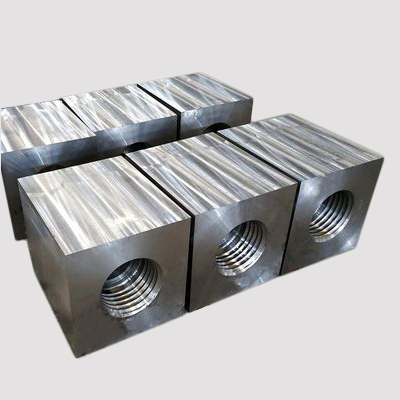
Stainless steel blocks — also described as flat bar, plate, or billet depending on aspect ratio — provide stock for mold bases, die inserts, structural brackets, and large machined components. A block of stainless steel in 420 or 17-4 PH grade is commonly specified for plastic injection mold cores and cavities, where corrosion resistance from cooling water contact and polishability to optical-grade surface finish are required simultaneously. Block stainless steel in 304 or 316 grade serves food processing equipment, pharmaceutical machinery, and marine structural applications where weldability and hygiene are the primary selection criteria.
Closed Die Forging and Die Manufacturing for Hot Steel Forging
Closed die forging — also called impression die forging — is the dominant process for producing net-shape or near-net-shape steel components at volume. The heated billet is placed between two dies that contain a machined cavity in the shape of the finished part. As the dies close under press or hammer force, the steel flows to fill the cavity completely, producing a part with precise dimensions, excellent surface finish relative to open-die alternatives, and consistent grain flow throughout the cross section.
Closed die forging offers several advantages over open die forging for production parts: tighter dimensional tolerances (typically ±0.5 to ±1.5 mm depending on part size), reduced material waste through controlled flash formation, and repeatability across large production runs with minimal operator variability.
The manufacturing of dies for hot steel forging is itself a precision engineering discipline. Forging dies must withstand extreme thermomechanical cycling — repeated heating from contact with hot billets and cooling during the press cycle — while maintaining dimensional stability under loads that can reach several thousand tonnes. Die materials are selected for this service from hot work tool steel grades, primarily:
- H13 (AISI): The most widely used hot work tool steel for forging dies. Contains 5% chromium, 1.5% molybdenum, and 1% vanadium, providing excellent hot hardness retention, thermal fatigue resistance, and toughness at elevated temperature. Typically hardened to 44 to 50 HRC for forging die applications.
- H11: Similar to H13 but with lower vanadium content, offering slightly higher toughness at moderate hardness. Used where die cracking from thermal shock is the primary failure mode.
- H21: Higher tungsten content provides superior hot hardness for extreme temperature applications, such as dies used in brass and copper forging where billet temperatures approach those of steel forging.
Die cavities are machined by CNC milling and EDM (electrical discharge machining) to achieve the geometry and surface finish required, then heat treated, finish ground, and polished before commissioning. Die life in high-volume steel forging operations ranges from 5,000 to 50,000 parts depending on part geometry, forging temperature, billet material, and lubrication practice — with die refurbishment through re-machining and re-hardening extending total service life significantly beyond the initial run.
Tool Steel Forging: Characteristics and Applications
Tool steel forging combines the high alloy content of tool steels — which provides hardness, wear resistance, and hot strength — with the grain refinement and structural integrity that only the forging process delivers. The result is tooling and wear components that outperform cast or machined equivalents in demanding service conditions.
The key characteristics of tool steel that make it suitable for forged components include:
- High carbon content (0.5% to 2.3%): Provides the carbon available for carbide formation and martensitic hardening during heat treatment.
- Significant alloy additions: Chromium, molybdenum, vanadium, tungsten, and cobalt in various combinations tailor wear resistance, hot hardness, toughness, and dimensional stability to specific tool applications.
- Response to heat treatment: Tool steels are designed for precise hardening and tempering cycles that produce specific hardness and toughness combinations. Forged tool steel achieves more uniform heat treatment response than cast equivalents due to reduced segregation.
- Carbide distribution: Forging breaks up the carbide networks that form during solidification, distributing carbides more uniformly through the matrix. This improves toughness without sacrificing wear resistance — a critical benefit for dies, punches, and cutting tools subjected to impact loading.
Common forged tool steel applications include cold work dies and punches (D2, A2 grades), hot work forging and die casting dies (H13, H11), high-speed cutting tools (M2, M4), and plastic mold tooling (P20, 420 stainless). In each case, the combination of forging process and tool steel chemistry produces a component capable of service conditions that neither casting nor standard steel can meet.