

 English
 русский
Precision Metal Components
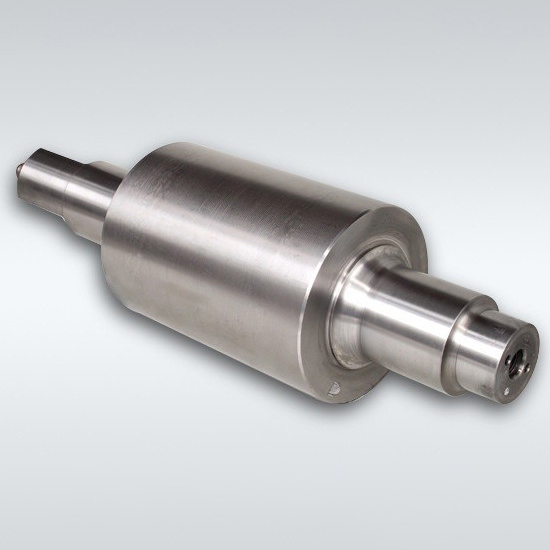
Steel Shaft Selection Guide: Materials, Manufacturing, and Performance
A steel shaft's performance depends on decisions made long before it's installed — the steel grade, whether it's cast or forged, how it's heat treated, and how precisely it's machined all determine how it holds up under load, torque, and repeated cycling over years of service. This guide covers each of those factors in depth, along with the failure modes, standards, and inspection practices that matter once a shaft is in operation.
What Makes Steel the Standard Shaft Material?
Steel remains the default material for rotating and load-bearing shafts because it offers a practical balance of strength, stiffness, machinability, and cost that few alternative materials match across the full range of industrial applications. While materials like titanium or aluminum alloys offer weight advantages in specific niches such as aerospace, steel's combination of fatigue resistance, availability, and predictable behavior under both static and cyclical loading keeps it the standard choice for general industrial, automotive, and heavy machinery shafts.
Fatigue
Steel's cyclical load resistance suits rotating shaft duty
Machinable
Wide range of grades balance hardness and workability
Treatable
Responds predictably to heat treatment processes
Cast Steel vs. Forged Steel
| Factor | Cast Steel | Forged Steel |
|---|---|---|
| Grain structure | Uniform but not aligned to load direction | Grain flow aligned with shape, improving strength |
| Strength and toughness | Good, suited to moderate load applications | Higher, better fatigue and impact resistance |
| Complex geometry | Easier to produce intricate shapes economically | Better suited to simpler, elongated profiles like shafts |
| Internal defects | More prone to porosity or shrinkage voids | Fewer internal voids due to compressive forming |
| Cost at scale | Lower for complex shapes in high volume | Higher, but often justified for critical load-bearing shafts |
Comparison of cast steel and forged steel for shaft manufacturing.
For most rotating shaft applications, forged steel is preferred because the forging process aligns the internal grain structure along the length of the shaft, giving it significantly better fatigue resistance under the cyclical bending and torsional loads a shaft typically experiences in service. Cast steel remains a reasonable choice where the shaft's geometry is complex, load requirements are moderate, and production cost at volume outweighs the fatigue-life advantage of forging.
Carbon Steel vs. Alloy Steel Shaft
Key Distinction
A carbon steel shaft relies primarily on carbon content for strength and hardness, offering good machinability and lower cost for general-purpose applications with moderate load and wear requirements. An alloy steel shaft includes additional elements — such as chromium, nickel, or molybdenum — that improve hardenability, toughness, and wear resistance beyond what carbon content alone can achieve.
In practice, carbon steel shafts suit lower-stress, cost-sensitive applications, while alloy steel shafts are chosen where higher strength-to-weight ratio, superior fatigue resistance, or performance in demanding thermal or load conditions justifies the added material cost. Chromium-molybdenum alloys, for example, are common in shafts that see both high torque and elevated operating temperatures, where straight carbon steel would soften or lose fatigue strength over time.
Grade selection within each category also matters. Medium-carbon steels (roughly 0.3-0.5% carbon) are a common baseline for general shaft stock, offering a workable balance of strength and machinability. Alloy grades such as 4140 or 4340 are widely used where higher strength-to-weight ratio and deeper hardenability are required, particularly in shafts that will be induction hardened or carburized.
Steel Shaft Manufacturing Process
The steel shaft manufacturing process typically follows a consistent sequence, whether starting from cast or forged raw stock:
Precision machined steel shaft production often adds a final grinding pass after heat treatment, since hardening can introduce slight dimensional distortion that turning alone cannot correct to tight tolerances. For shafts requiring very tight straightness or diameter tolerances, some manufacturers also include a stress-relief step between rough and finish machining, which helps prevent the shaft from warping as internal stresses from earlier machining passes are released.
Steel Shaft Heat Treatment Guide
Common Heat Treatment Methods
- Normalizing: refines grain structure and relieves internal stress from casting or forging before machining.
- Quenching and tempering: increases hardness and strength, then reduces brittleness to a usable balance for the application.
- Induction hardening: hardens only the shaft's surface layer, preserving a tougher core for shock resistance.
- Carburizing: adds carbon to the surface of low-carbon steel shafts to increase surface hardness and wear resistance.
- Nitriding: introduces nitrogen into the surface at lower temperatures, improving wear and fatigue resistance with minimal distortion.
The right heat treatment depends on whether the shaft needs uniform strength throughout, or a hard wear-resistant surface with a tougher, more shock-resistant core — a common requirement for shafts subject to both friction wear at bearing or seal contact points and impact loading elsewhere along their length. Nitriding in particular is often chosen for precision shafts where dimensional stability after treatment is a priority, since it causes far less distortion than quenching-based methods.
Surface Finish and Coatings
Beyond bulk heat treatment, surface finish and coatings play a significant role in shaft longevity. A finer surface finish reduces the microscopic stress risers that can initiate fatigue cracks, which is why critical rotating shafts are often specified with a defined surface roughness value rather than left to standard machining finish. In corrosive or humid environments, additional protection — such as hard chrome plating, black oxide coating, or specialized corrosion-resistant coatings — can meaningfully extend service life beyond what the base steel grade alone would provide, particularly at points where the shaft is exposed to the environment rather than sealed within a housing.
Common Applications of Steel Shafts
Power Transmission
Gearboxes, motors, and couplings that transmit torque between rotating components.
Pumps & Compressors
Shafts supporting continuous rotation under fluid or gas pressure loads.
Heavy Machinery
Construction and material handling equipment requiring high torque capacity.
Automotive & Rail
Drive shafts and axles requiring fatigue resistance under repeated cycling.
Industrial steel shaft applications span nearly every sector that involves rotating machinery, from manufacturing plants to power generation equipment, with the specific steel grade and treatment varying based on load, speed, and environmental exposure. Marine and offshore equipment, for example, typically call for corrosion-resistant alloy grades and additional coatings, while indoor manufacturing equipment operating in a controlled environment can often use more standard carbon steel grades without added protection.
Common Steel Shaft Failure Modes
What Causes Shafts to Fail
- Fatigue failure: the most common failure mode, caused by repeated cyclical loading below the material's ultimate strength, often starting at a stress concentration point.
- Overload failure: sudden fracture from a load exceeding the shaft's design capacity, often from an unexpected shock or jam condition.
- Corrosion fatigue: combined effect of corrosive environment and cyclical loading, which accelerates crack initiation compared to fatigue alone.
- Wear failure: gradual material loss at bearing, seal, or coupling contact points due to friction or misalignment.
- Torsional failure: twisting fracture from torque exceeding the shaft's design limits, often seen in drive shafts under sudden load spikes.
Understanding which failure mode is most likely for a given application helps guide both material selection and design details like fillet radii at diameter changes, which are a common origin point for fatigue cracks when left too sharp.
Factors Affecting Steel Shaft Performance
- Material grade: carbon content and alloying elements set the baseline strength, hardness, and fatigue resistance.
- Heat treatment: hardening and tempering directly affect wear resistance and toughness balance.
- Surface finish: smoother finishes reduce stress concentration points that can initiate fatigue cracking.
- Shaft geometry: keyways, shoulders, and diameter changes concentrate stress and require careful design to avoid premature failure.
- Operating environment: temperature, corrosion exposure, and lubrication all influence long-term shaft performance.
- Alignment and installation: even a well-specified shaft can fail early if misaligned with connected components during installation.
Industry Standards and Quality Inspection
Steel shafts for critical applications are typically specified and inspected against recognized industry standards covering material composition, mechanical properties, and dimensional tolerances — such as ASTM, DIN, or JIS specifications depending on the region and industry. Quality inspection commonly includes dimensional checks against drawing tolerances, hardness testing to confirm heat treatment results, and non-destructive testing methods such as ultrasonic or magnetic particle inspection to detect internal or surface defects that visual inspection alone would miss. For shafts in critical rotating equipment, balance testing is also standard practice, since even small mass imbalances can create vibration that accelerates bearing wear and fatigue damage over time.
Steel Shaft Material Selection
How to Choose the Right Steel Shaft
- Load type: bending, torsional, or combined loading affects which grade and treatment best resist fatigue.
- Operating speed: high-speed applications require tighter balance tolerances and often finer surface finishes.
- Environmental exposure: corrosive or high-temperature environments may call for alloy steel or additional coatings.
- Precision requirements: tight-tolerance applications benefit from precision machined shafts with post-hardening grinding.
- Duty cycle: continuous versus intermittent operation affects how much fatigue margin to design into the shaft.
- Budget and volume: cast steel may be more economical for lower-stress, high-volume production; forged steel for critical load-bearing shafts.
Working through load type, environment, and precision needs before specifying material grade is what separates a steel shaft selection that performs reliably for years from one that fails prematurely under real-world operating conditions. Involving both a materials specialist and the equipment designer early in the selection process also helps catch mismatches between shaft capability and actual operating conditions before they become costly failures in the field.