

 English
 русский
What Is Forged Steel?
Forged steel is steel that has been shaped by applying compressive force — hammer blows, press tonnage, or die pressure — while the metal is at an elevated temperature, typically between 1,100°C and 1,250°C (2,000°F–2,300°F) for hot forging. The mechanical working breaks up cast dendritic grain structures, closes internal porosity and voids, and reorients the metal's crystalline grain flow to follow the contour of the finished part. The result is a component with significantly higher strength, toughness, and fatigue resistance than an equivalent part produced by casting or machining from bar stock.
The distinction from cast steel is fundamental. In casting, molten metal is poured into a mold and solidifies with a random, equiaxed grain structure and a higher likelihood of internal shrinkage defects. Forging, by contrast, works solid or semi-solid metal under pressure, which refines grain size, eliminates porosity, and aligns the grain flow with the principal stress directions of the finished part. This grain flow alignment — often visualized in etched cross-sections as continuous flow lines through the part geometry — is why forged steel components outlast cast equivalents in cyclic loading, impact, and high-stress applications by a substantial margin.
Forging Processes at a Glance
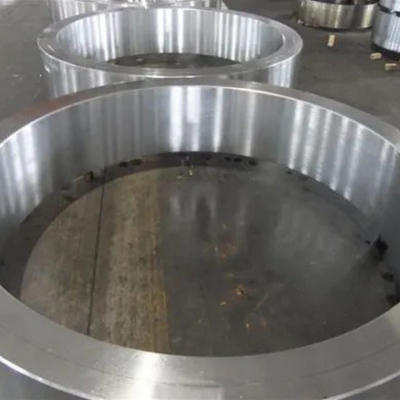
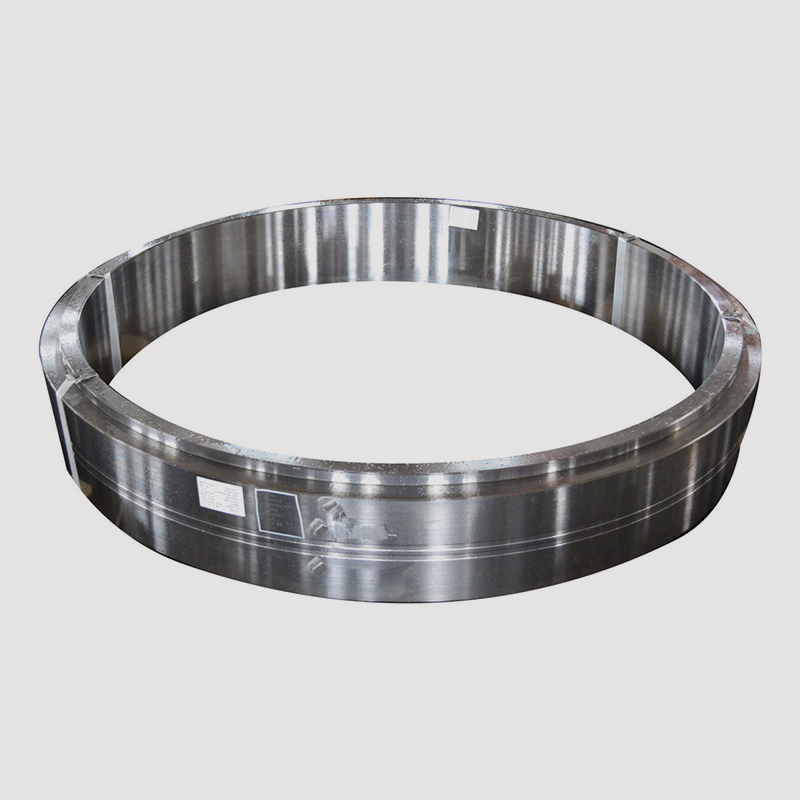
- Open-die forging (free forging) — the workpiece is deformed between flat or simple contoured dies with no lateral confinement. Used for large, simple shapes: shafts, discs, rings, and blocks. Suitable for parts too large for closed-die tooling and for preliminary shaping before finish forging.
- Closed-die (impression-die) forging — upper and lower dies with machined cavities confine the workpiece and force metal to fill the die impression. Produces near-net-shape parts with tighter dimensional tolerances and less machining allowance. Standard for connecting rods, crankshafts, flanges, and gear blanks.
- Roll forging — the workpiece passes through contoured rolls that progressively reduce cross-section and shape the part. Common for tapered shafts, leaf springs, and elongated components.
- Cold forging — performed at or near room temperature. Produces exceptional surface finish and dimensional precision with work-hardening benefits. Limited to smaller, simpler geometries in ductile alloys; not suitable for high-alloy or large-section steels.
Forged Steel Grades: Classification and Selection
Not all steels respond equally to forging, and alloy selection drives the achievable combination of strength, toughness, hardenability, and machinability in the finished component. The principal forged steel grades used in industrial and engineering applications fall into four families.
Carbon Steel Forgings
Plain carbon steels are the most economical forging material and cover a wide strength range depending on carbon content. Low-carbon grades (AISI 1020–1040) forge easily, weld without preheat, and are used where moderate strength and high ductility are required — agricultural equipment, structural components, and general engineering parts. Medium-carbon grades (AISI 1045–1060) are the most widely specified forging steels: they respond well to heat treatment, achieve tensile strengths of 700–1,000 MPa after quench-and-temper, and are used for shafts, gears, and machinery components. High-carbon grades (AISI 1070–1095) are harder and more wear-resistant but less tough; applications include hand tools, springs, and wear components.
Alloy Steel Forgings
Alloy additions — chromium, molybdenum, nickel, vanadium, manganese — dramatically improve hardenability (the ability to achieve hardness through the full cross-section of large parts) and elevate mechanical properties above what carbon content alone can achieve. The most common alloy forging grades include:
- AISI 4140 (Cr-Mo steel) — the workhorse of alloy steel forgings. Excellent combination of strength (900–1,100 MPa tensile in Q&T condition), toughness, and machinability. Standard for shafts, spindles, tooling, and pressure vessels up to moderate section sizes.
- AISI 4340 (Ni-Cr-Mo steel) — superior hardenability to 4140, achieving consistent through-hardness in sections exceeding 150 mm. Tensile strengths of 1,000–1,400 MPa are achievable. Used for heavy-duty shafts, aircraft landing gear components, and large gears where section size precludes adequate hardening with 4140.
- AISI 8620 (Ni-Cr-Mo, case-hardening grade) — low-carbon core with high alloy content for case hardening by carburizing. Used where a hard, wear-resistant surface and a tough, ductile core are both required — gears, camshafts, and splined shafts.
- AISI 4150 / 4150H — higher carbon variant of 4140 with increased hardness potential, used for dies, large shafts, and components requiring surface hardness above what 4140 achieves.
Stainless Steel Forgings
Stainless grades — primarily AISI 304, 316, 410, and 17-4PH — are forged for applications requiring corrosion resistance alongside structural performance. Austenitic grades (304, 316) are non-magnetic, weld easily, and resist acidic and chloride environments; they are used for valves, pump bodies, and food processing equipment. Martensitic grades (410, 420) can be hardened and are used for cutlery, fasteners, and turbine components. Precipitation-hardening grades (17-4PH) combine corrosion resistance with tensile strengths above 1,100 MPa and are preferred in aerospace and medical device applications.
Microalloy and Tool Steel Forgings
Microalloyed steels (HSLA grades containing vanadium, niobium, or titanium additions at the 0.05–0.15% level) achieve mechanical properties comparable to quenched-and-tempered alloy steels directly from the forging heat, eliminating a separate heat treatment operation. This makes them attractive for high-volume automotive forgings — connecting rods, crankshafts, and suspension components — where process cost reduction is a priority. Tool steels (H13, D2, M2) are forged for dies, cutting tools, and high-temperature service components where hardness at elevated temperature and wear resistance are paramount.
Forged Steel Parts: Industries and Common Components
Forged steel parts appear in every industry where structural reliability under dynamic loading is non-negotiable. The manufacturing method is selected — and its higher unit cost justified — precisely because casting, welding, or machining from bar cannot consistently achieve the fatigue life and impact resistance that forging delivers.
| Industry | Typical Forged Steel Parts | Common Grades |
|---|---|---|
| Automotive | Crankshafts, connecting rods, steering knuckles, CV joints, wheel hubs | 1045, 4140, 4340, microalloy |
| Aerospace | Landing gear components, structural brackets, engine shafts, bulkheads | 4340, 300M, 17-4PH, H13 |
| Oil & Gas | Drill collars, valve bodies, flanges, wellhead components, BOP components | 4145H, 4340, 410SS, F22 |
| Power Generation | Turbine shafts and discs, generator rotor forgings, pressure vessel nozzles | 26NiCrMoV, 30CrMoV, P91 |
| Mining & Construction | Excavator pins, track links, bucket teeth, drill bits, crusher jaws | 4140, 4340, 8620, manganese steel |
| Industrial Machinery | Press frames, mill rolls, pump shafts, gear blanks, couplings | 1045, 4140, 4340, tool steels |
The common thread across all these applications is cyclic or impact loading. A forged crankshaft experiences hundreds of millions of stress cycles over an engine's service life; a forged landing gear component must absorb impact loads equivalent to several times the aircraft's landing weight without crack initiation. No other commercial manufacturing process provides the uninterrupted grain flow, low inclusion content, and refined grain size that enable forged steel parts to meet these demands reliably.
Forged Steel Shafts: Design, Grades, and Manufacturing
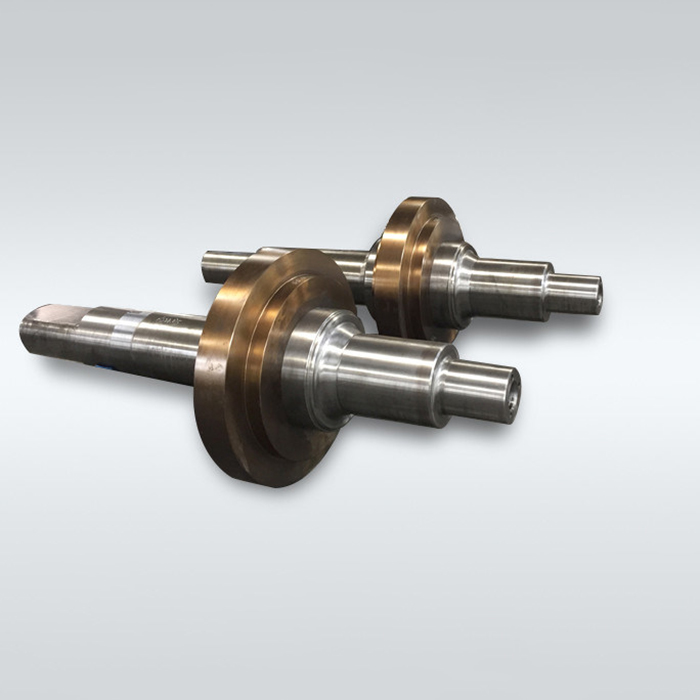
Shafts are among the most widely produced and demanding forged steel parts. A shaft must transmit torque — sometimes continuously at high speed for years — while withstanding combined bending, torsion, and axial loads, often with stress concentrations at keyways, shoulders, and splines. Fatigue failure at these stress raisers is the primary mode of shaft failure in service, which is why grain flow continuity through the shaft cross-section is directly linked to fatigue life in a way that machined bar stock cannot replicate.
Open-Die vs. Closed-Die Shaft Forging
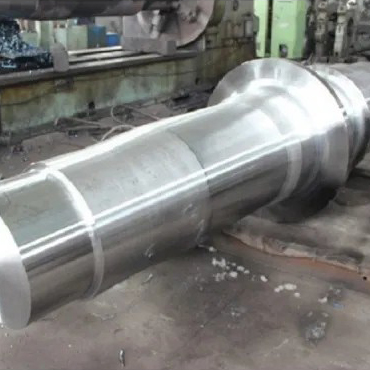
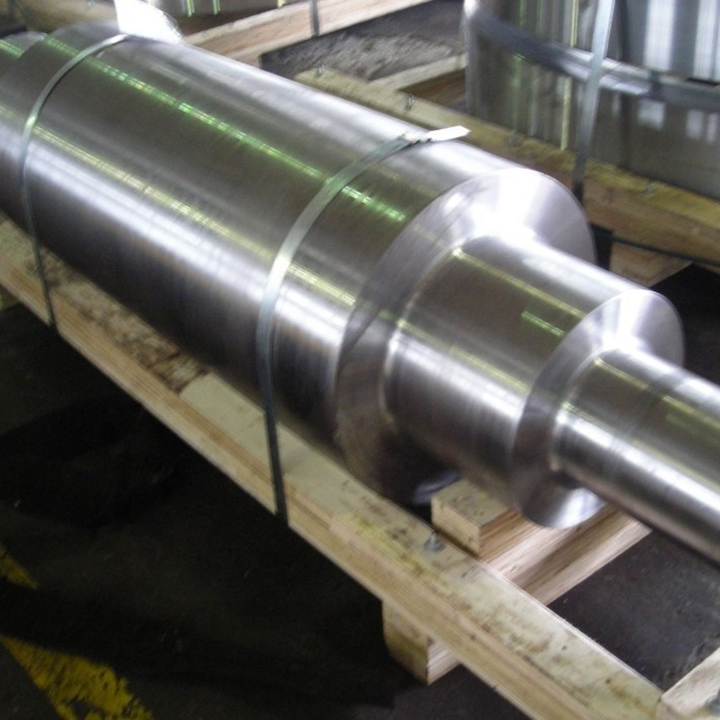
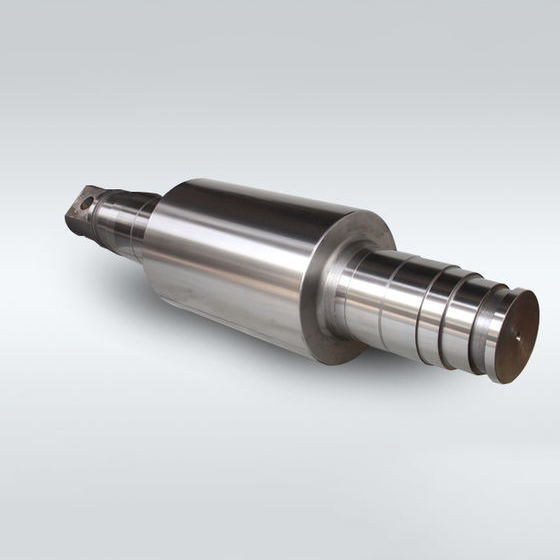
Large shafts — turbine generator shafts weighing hundreds of tonnes, propeller shafts for marine vessels, and rolling mill rolls — are produced by open-die forging on hydraulic presses or hammer forges. The billet is repeatedly turned and pressed to work the full cross-section and achieve consistent grain refinement through the diameter. For large section forgings, multiple reduction steps, intermediate reheating, and controlled cooling protocols are required to prevent cracking and achieve uniform microstructure from surface to core.
Smaller, higher-volume shafts — automotive transmission shafts, pump shafts, and machine tool spindles — are more economically produced by closed-die or roll forging where the die geometry provides near-net shape, reducing the machining stock left for finishing. Closed-die shaft forgings typically have 15–30% less machining stock than open-die equivalents, which translates directly to reduced material consumption and cycle time.
Grade Selection for Forged Steel Shafts
The choice of steel grade for a shaft forging depends on three parameters: required mechanical properties after heat treatment, section size (which determines hardenability requirements), and operating environment.
- AISI 1045 — the entry-level shaft grade. Adequate for low-to-moderate torque applications in smaller diameters (up to ~75 mm) where through-hardening is not required. Tensile strength of 570–700 MPa in normalized condition.
- AISI 4140 — the most specified alloy shaft grade. Hardenable to full section in diameters up to approximately 100 mm; achieves 900–1,050 MPa tensile in Q&T condition. Covers the majority of industrial pump shafts, conveyor drives, and general machinery shafts.
- AISI 4340 — for large-diameter shafts (100–300 mm and beyond) where 4140 cannot achieve consistent through-hardness. The higher nickel content extends hardenability significantly. Power generation rotor shafts, marine propeller shafts, and heavy equipment drive shafts are typical applications. Tensile strengths of 1,000–1,200 MPa are achievable in large sections.
- EN 36 / 9310 (Ni-Cr case-hardening grades) — used for shafts requiring a hard, wear-resistant surface combined with a tough core: gearbox layshafts, splined shafts, and camshafts where contact fatigue at splines or journals is the governing failure mode.
- Duplex and super-duplex stainless (2205, 2507) — for shafts in marine, chemical processing, and desalination environments where chloride corrosion fatigue is the design constraint. Higher cost but eliminates the surface corrosion initiation sites that accelerate fatigue crack growth in conventional alloy steels.
Post-Forging Treatment and Finishing
Forged steel shafts are rarely used in the as-forged condition. The standard production sequence after forging includes normalizing or annealing to relieve forging stresses and homogenize the microstructure, followed by rough machining to remove scale and establish datum surfaces, then quench and temper heat treatment to achieve the specified mechanical properties, and finally finish machining, grinding, and surface treatment as required. Surface treatments that improve shaft fatigue performance include induction hardening of bearing journals and fillets, nitriding for high surface hardness without dimensional change, and shot peening to introduce compressive residual stresses that retard fatigue crack initiation.
Straightness is a critical quality parameter for finished shafts: rotational imbalance caused by shaft bow generates centrifugal forces that scale with the square of operating speed. Straightness tolerances for precision shafts are typically specified at 0.1–0.3 mm total indicator runout per meter of length, which requires controlled cooling after heat treatment and, in many cases, a hot or cold straightening operation before final machining.
Forged Steel vs. Cast Steel: When to Choose Each
The decision between forged and cast steel is ultimately an engineering and economic trade-off. Forging is not universally superior — it is the correct choice for specific conditions, and understanding those conditions prevents over-specification as much as it prevents underperformance.
Choose forged steel when:
- The part is subject to cyclic, fatigue, or impact loading — forgings provide 20–30% higher fatigue strength than castings in equivalent grades.
- High reliability is required and failure consequences are severe — safety-critical components in aerospace, pressure equipment, and structural applications.
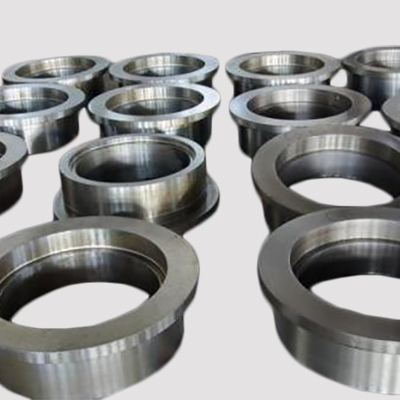
- The geometry is relatively simple and producible with dies — shafts, flanges, rings, discs, connecting rods, and similar forms.
- Production volume justifies tooling cost — closed-die forging tooling is expensive upfront but yields low per-unit cost at volume.
Choose cast steel when:
- The geometry is complex with internal cavities, undercuts, or thin walls that forging dies cannot form — pump casings, valve bodies with internal passages, and complex housing geometries.
- Production volumes are low and tooling investment cannot be amortized — sand casting tooling costs a fraction of forging dies.
- Loading is predominantly static and compressive rather than cyclic — castings perform adequately in compression-dominant applications where fatigue initiation from internal defects is not the governing failure mode.
- Weight sections are very large and uniform — some large structural components are more economically cast and then weld-repaired to specification than forged.
Quality Standards and Testing for Forged Steel Components
Forged steel parts for critical applications are subject to rigorous inspection and documentation requirements. The applicable standards depend on the industry and end use, but the most widely referenced frameworks include:
- ASTM A668 — standard specification for steel forgings for general industrial use, covering carbon and alloy steel classes with defined tensile, yield, and impact requirements by class designation.
- ASTM A388 — ultrasonic examination of heavy steel forgings, specifying acceptance criteria for internal reflectors (inclusions, porosity, and segregation) by zone and section thickness.
- EN 10250 — European standard for open-die steel forgings for general engineering purposes, covering material grades and mechanical property requirements.
- API 6A / 6D — for oil and gas wellhead and pipeline valve forgings, specifying material, traceability, mechanical testing, and NDE requirements with additional pressure rating requirements.
- AS9100 / NADCAP — aerospace quality management and special process certification requirements applicable to aerospace forging suppliers.
Routine inspection of forged steel parts encompasses dimensional verification, hardness testing, tensile and Charpy impact testing from heat-treated coupons (or, for critical parts, from sacrificial sections of the forging itself), magnetic particle inspection (MPI) for surface-breaking defects, and ultrasonic testing (UT) for subsurface integrity. For large forgings in power generation and pressure vessel applications, 100% volumetric UT scanning is standard practice, with acceptance zones defined by the applicable ASME or EN standard and verified by calibrated reference blocks with known artificial reflectors.