

 English
 русский
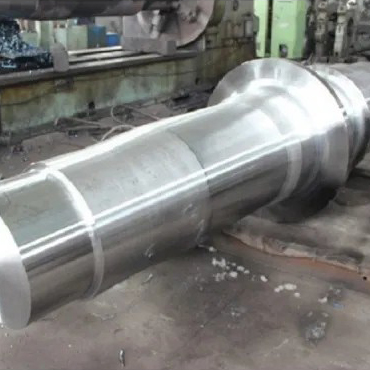
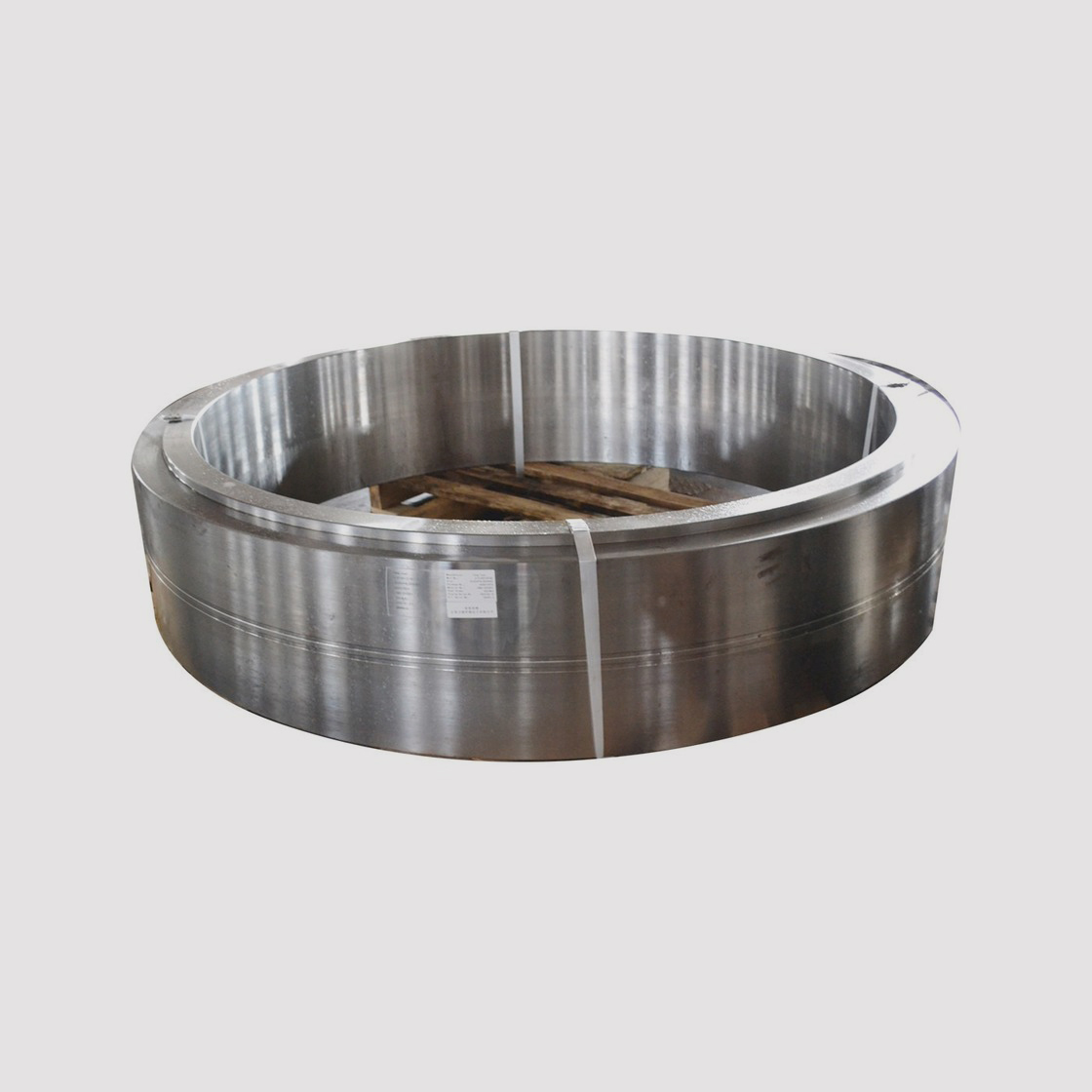
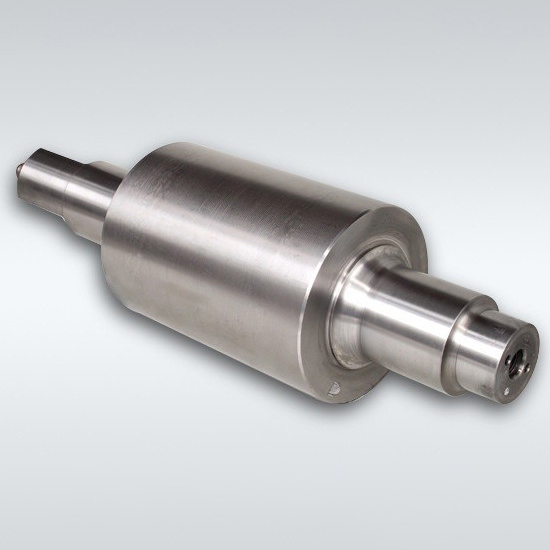
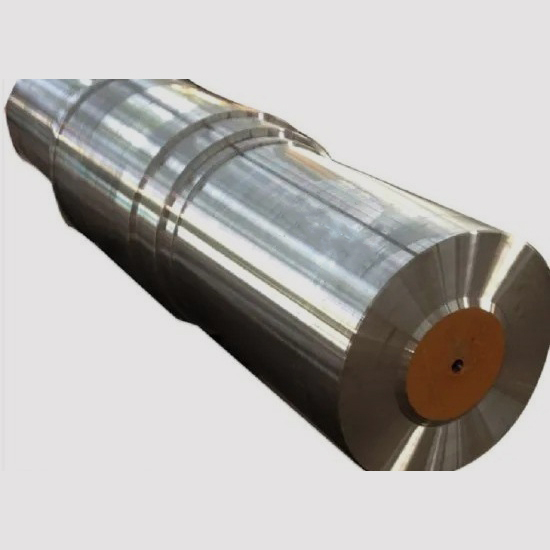
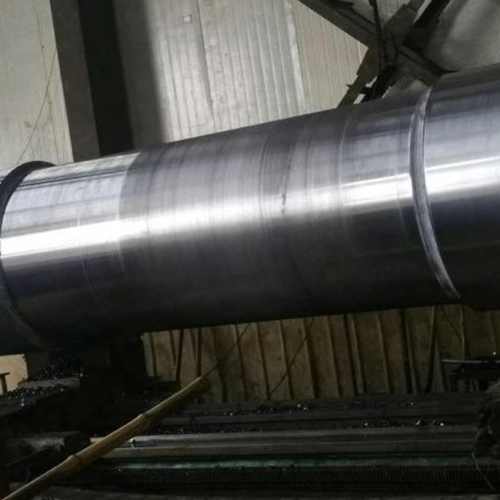
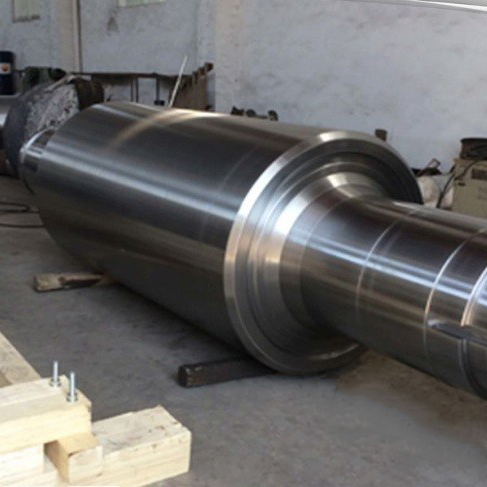
A forged steel block is a semi-finished or finished product created by applying localized compressive force to a heated steel ingot or billet. This process, conducted below the melting point of the metal, dynamically recrystallizes the grain structure, eliminating internal voids and aligning grain flow with the block's geometry. The result is a material with significantly enhanced mechanical properties—higher tensile strength, greater toughness, and superior fatigue resistance—compared to cast or rolled equivalents. These blocks serve as the foundational raw material for critical components in industries where failure is not an option: aerospace landing gear, power generation turbine shafts, high-pressure oil and gas valves, and large structural dies.
How Are Forged Steel Blocks Manufactured?
The Step-by-Step Manufacturing Process
The production of a forged steel block follows a controlled metallurgical pathway. Each stage is designed to refine the material's internal structure and prepare it for its final engineering application [citation:9].
Raw Material Selection and Sawing
The process begins with a high-quality steel ingot or billet. The material grade is selected based on the final application's requirements—carbon steel for general structural use, alloy steel for high-stress environments, or stainless steel for corrosion resistance. The raw stock is then cut to the required weight and dimensions using heavy-duty band saws, ensuring an accurate starting volume for the forging operation.
Heating and Forging
The cut billet is heated in a furnace to its recrystallization temperature, typically between 1100°C and 1250°C for most steel grades. This makes the steel malleable without melting it. The heated material is then transferred to forging equipment, such as a hydraulic press or hammer. Through compressive force, the block is shaped. A critical parameter here is the forging ratio, which is the ratio of the original cross-sectional area to the final cross-sectional area. A ratio of at least 3:1 is often specified to ensure complete internal working and grain refinement [citation:3].
Heat Treatment
Post-forging, the block undergoes controlled heat treatment to achieve the desired mechanical properties. This typically involves annealing to soften the steel for machining, normalizing to refine the grain structure, or quenching and tempering (Q&T) to achieve high strength and hardness. For instance, a 4140 forged alloy steel block will be oil-quenched and then tempered to a specific hardness range, balancing strength with toughness.
Precision Rough Machining
Finally, the heat-treated block is taken to a rough machining stage. Here, excess material, including surface scale and decarburization layers, is removed. This brings the block close to its final dimensions (near-net shape) and prepares it for non-destructive testing. It is at this stage that the pre-machined forged steel block becomes a value-added product, ready for final finishing by the customer.
Key Equipment and Technologies
- Sawing: Large band saws with carbide tips ensure clean, precise cuts with minimal material waste.
- Forging: Hydraulic presses (ranging from 1000 to 10,000+ tons) provide the steady, high pressure needed for deep section penetration and grain refinement. Open-die forging is typical for custom blocks [citation:1].
- Heat Treatment: Programmable, car-bottom furnaces with precise temperature control (±10°C) and integrated quenching systems (oil, water, or polymer) are essential for consistent results.
- Machining: Heavy-duty CNC lathes, horizontal boring mills, and planer mills capable of handling large tonnage blocks and tight tolerances.
Forged Steel Block vs. Cast Steel Block: Which Is Better?
Understanding the Core Differences
Forged Steel Block: Strength and Reliability
A forged steel block is created by mechanically working a solid piece of steel. This process breaks down and realigns the grain structure to follow the contour of the block, resulting in a dense, directional grain flow. This eliminates internal voids and porosity, leading to superior mechanical properties, especially in terms of toughness and fatigue resistance. Forged products are the preferred choice for parts that must withstand high impacts and cyclic stresses [citation:2].
Cast Steel Block: Complexity and Cost
A cast steel block is formed by pouring molten steel into a mold, where it solidifies into the desired shape. This process allows for complex geometries, internal cavities, and large sizes that are difficult or impossible to achieve with forging. However, the solidification process can lead to internal porosity, shrinkage cavities, and a less uniform grain structure. While modern casting techniques have improved, cast parts generally exhibit lower strength and toughness than their forged counterparts [citation:2].
A Detailed Comparison Table
| Property | Forged Steel Block | Cast Steel Block |
|---|---|---|
| Grain Structure | Refined, directional grain flow aligned with shape. | Random, as-cast grain structure with potential for large grains. |
| Internal Soundness | Dense, no porosity, shrinkage, or gas voids. | Potential for porosity, micro-shrinkage, and gas pockets. |
| Strength & Toughness | Superior tensile, yield, and impact strength. Higher fatigue resistance. | Generally lower than forged. Properties can be more variable. |
| Design Flexibility | Limited to simpler shapes without internal cavities. | High complexity, intricate internal geometries possible. |
| Typical Applications | High-stress components: shafts, gears, dies, pressure parts. | Complex housings, valve bodies, machine bases, art. |
How to Choose the Right Process for Your Application
The choice between forging and casting is an engineering decision based on application requirements. If the primary need is for maximum reliability under unpredictable or cyclic loading, a forged block is the superior choice. For complex, large-scale parts where weight and shape are the primary drivers and the service stresses are lower or more predictable, casting can be a cost-effective solution. In many high-end applications, such as in the oil and gas industry, forged blocks are mandatory due to the risks associated with undetected internal casting defects [citation:2].
What Are the Standard and Custom Sizes for Forged Steel Blocks?
Common Dimensions and Tolerances
While "standard" sizes can vary between mills, forged blocks are typically produced in a range of common cross-sections and lengths to serve as stock for further processing. For example, a pre-hardened mold steel like Toolox® 46 is available as a forged block in thicknesses from 170 mm to 320 mm [citation:4]. General engineering blocks might be available in increments of 50mm or 100mm in thickness and width. Dimensional tolerances are a key specification. For example, thickness tolerances on a forged block might be specified as 0/+3.2 mm, and flatness deviation is often guaranteed at a maximum of 1 mm/m [citation:4].
The Custom Size Advantage
Working with a Custom Forged Steel Block Factory
For most B2B engineering applications, a custom size forged steel block is the most efficient solution. Ordering a block to your exact finished dimensions—plus a small machining allowance—reduces material waste, minimizes machining time, and lowers overall component cost. A custom factory can tailor the forging and heat treatment to the specific mass and geometry of your part, ensuring uniform properties throughout. For instance, a large plastic mold for an automotive dashboard requires a large die steel block custom to specific dimensions (e.g., 1285 mm x 1190 mm section) with guaranteed internal soundness [citation:8].
How to Provide Your Design Specifications
When ordering a custom block, you should provide a detailed drawing or specification including:
- Required material grade (e.g., AISI 4140, 1.2738, 316L).
- Finished dimensions (length, width, height) with tolerances.
- Required mechanical properties (e.g., tensile strength, hardness range).
- Any required testing, such as 100% ultrasonic testing per ASTM A388 [citation:4].
- Required delivery condition (as-forged, rough machined, heat treated).
What Are the Key Mechanical Properties of a Forged Steel Block?
Defining Mechanical Properties
Tensile Strength and Yield Strength
Tensile strength is the maximum stress a material can withstand while being stretched or pulled before breaking. Yield strength is the stress at which a material begins to deform plastically. For a 4140 forged alloy steel block in the quenched and tempered condition, the tensile strength can reach 1000-1200 MPa, with a yield strength of 800-1000 MPa. These values are significantly higher than cast versions of the same material due to the densification and grain refinement from forging.
Hardness and Impact Toughness
Hardness is the resistance to indentation and is often correlated with wear resistance. For tool and die applications, hardness is a primary specification. For example, a forged steel block for die applications might be supplied pre-hardened to 430-490 HBW [citation:4]. Impact toughness (measured in Joules, often with a Charpy V-notch test) measures a material's ability to absorb energy during fracture. Forged blocks exhibit superior impact toughness, especially in the transverse direction, because the working of the material closes up internal weaknesses. The specified minimum impact energy for a critical forged block might be 11 J at 20°C [citation:4].
Factors Influencing Mechanical Performance
The forged steel block mechanical properties are not inherent but are a direct result of the manufacturing process. The forging ratio is paramount; a higher ratio (≥3.0) ensures that the center of the block is fully worked, eliminating any cast structure from the original ingot [citation:3]. Subsequent heat treatment (austenitizing, quenching, tempering) dictates the final microstructure—whether it is martensitic, bainitic, or a mixture—which directly controls the final hardness, strength, and toughness [citation:5][citation:8].
Why Choose a Forged Steel Block for Die Applications?
The Demands of Modern Die Making
Dies for forging, stamping, and plastic injection molding operate under extreme conditions. They are subjected to high mechanical loads, thermal cycling, and abrasive wear. The steel used must have high hardenability to ensure uniform properties throughout a large section, good machinability for creating complex cavities, and adequate toughness to prevent cracking [citation:5].
Benefits of Using Forged Steel Blocks for Dies
Structural Integrity for High-Stress Molds
A forged steel block for die applications provides the internal integrity required to withstand these forces. Unlike castings, which may have hidden porosity that can lead to premature die failure, a forged block offers a sound, dense core. This is particularly critical for large molds used in automotive applications, such as for bumpers and dashboards, where any surface defect on the mold can ruin thousands of parts. Studies on large 1.2738 steel blocks confirm that the forging and subsequent heat treatment must be carefully controlled to ensure consistent properties from the surface to the core of the die [citation:8].
Enhanced Wear Resistance and Longevity
The directional grain flow in a forged block can be oriented to be perpendicular to the die surface, maximizing wear resistance. Furthermore, the ability to use higher-alloyed tool steels, like H13 or D2, in a forged format provides the necessary hot hardness and wear resistance for long production runs. The fatigue life of a forged die is significantly longer than that of a cast die, directly translating to lower downtime and cost per part [citation:1][citation:9].
FAQ
What is the typical forging ratio required for a high-quality forged steel block?
A forging ratio of at least 3:1 is a common industrial standard to ensure complete internal working and refinement of the cast ingot structure. For critical applications, such as those in the aerospace or energy sectors, a higher ratio may be specified to guarantee maximum density and directional grain flow [citation:3].
How does ultrasonic testing (UT) ensure the quality of a forged steel block?
Ultrasonic testing (UT) is a non-destructive method used to inspect the internal soundness of a forged block. High-frequency sound waves are transmitted into the steel. When these waves encounter a discontinuity—such as a void, crack, or inclusion—they reflect back to a receiver. By analyzing these reflections, technicians can locate, size, and characterize internal flaws, ensuring the block meets the required quality standards like ASTM A388 or SEP 1921 [citation:4].
What is the difference in fatigue life between a forged and a cast steel block?
Forged steel blocks exhibit significantly longer fatigue life compared to cast blocks. This is primarily due to the elimination of internal porosity and the creation of a continuous, directional grain flow. Castings contain micro-voids and stress risers from the solidification process, which act as initiation points for fatigue cracks under cyclic loading. The refined, dense structure of a forging resists crack initiation and propagation, making it ideal for components like crankshafts and connecting rods [citation:1][citation:2].
Can you get a forged steel block certified for NACE MR0175/ISO 15156?
Yes. NACE MR0175/ISO 15156 is a standard for materials used in sour gas environments containing hydrogen sulfide (H₂S). To achieve compliance, the forged alloy steel block must have a specific chemistry (controlled for elements like sulfur and phosphorus) and be heat-treated to a maximum hardness level (typically ≤22 HRC for carbon and low alloy steels). A certified mill test report (MTR) documenting the chemical analysis and hardness test results is provided as proof of compliance [citation:2].
What are the standard roughness and tolerance for a pre-machined forged steel block?
A pre-machined forged steel block typically has a surface roughness in the range of Ra 3.2 to 12.5 μm. Dimensional tolerances are highly dependent on size, but for a custom order, a factory can often hold tolerances of ±0.5 mm to ±2.0 mm on critical dimensions after rough machining. This is considered a "near-net" shape, allowing the end-user to finish machine the component with minimal material removal [citation:3].
References
- Alibaba.com. (2026). Forging Solid Steel Blocks Guide: Composition, Structure, and Performance for Engineers. [citation:1]
- Fushun Special Steel Co., Ltd. (2023). The difference about Cast and Forged Steel. [citation:2]
- Changzhou Tiangong Forging Co., Ltd. Custom Size Smooth Forged Steel Block For Mechanical Press Frames. [citation:3]
- SSAB. Toolox® 46 Product Description. [citation:4]
- Uddeholm Tooling Aktiebolag. (1987). Alloy steel product, die blocks and other forgings and castings made thereof. European Patent EP0247415B1. [citation:5]
- Kim, S.W., et al. (2015). Manufacturing and testing of full scale prototype for ITER blanket shield block. Fusion Engineering and Design, 93, 69-75. [citation:6]
- Dongguan Chimold Technology Co., Ltd. Steel Forged Block 1.2738 Qt Plastic Mold Steel. [citation:7]
- Firrao, D., et al. (2007). Relationships between tensile and fracture mechanics properties and fatigue properties of large plastic mould steel blocks. Materials Science and Engineering: A, 468-470, 193-200. [citation:8]
- Alibaba.com. (2025). A Complete Overview of Forged Heavy Steel Block Forging. [citation:9]