

 English
 русский
Material Selection for Roller Shaft Applications
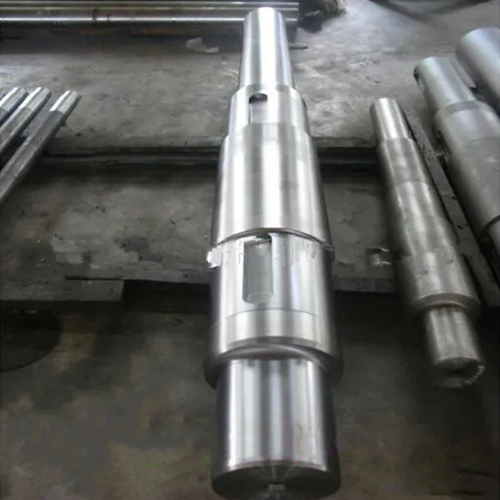
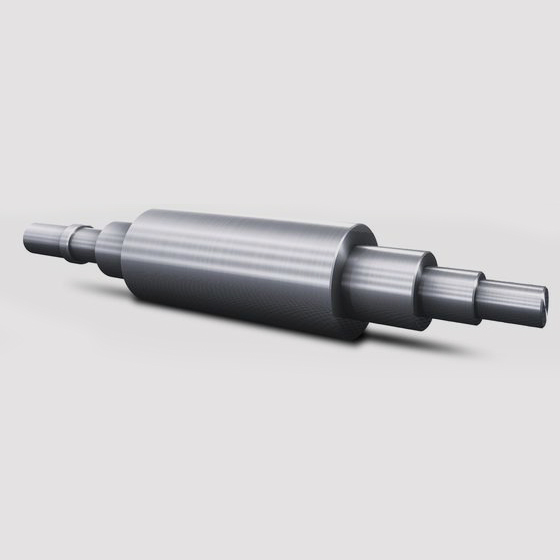
SS316/SS304 roller shafts and 4140/8620 forged steel shafts serve distinct industrial environments where corrosion resistance and mechanical strength present opposing priorities. Stainless steel roller shafts provide indefinite service life in washdown, chemical, and marine environments with tensile strengths of 515-620 MPa, while 4140 and 8620 forged alloy steels achieve 750-1,050 MPa tensile strengths with superior fatigue resistance for high-load rolling applications. The critical selection factor centers on environmental exposure: stainless grades dominate food processing, pharmaceuticals, and coastal installations where corrosion would destroy carbon steel within months, whereas forged alloy steels prevail in mining, steel mills, and heavy machinery where mechanical loading exceeds stainless capabilities. Cost differentials reach 3-5 times premium for stainless solutions, but lifecycle economics often favor stainless when maintenance downtime and replacement frequency are calculated.
The global industrial roller shaft market exceeds $2.8 billion annually, with stainless steel representing 35% of value but only 18% of unit volume due to material cost premiums. Forged alloy steels maintain dominance in heavy industry where load-bearing capacity determines equipment reliability.
Stainless Steel Roller Shaft Grades and Performance
Austenitic stainless steels provide unique combinations of corrosion immunity, non-magnetic properties, and adequate mechanical properties for moderate-load roller applications.
SS304 Composition and Mechanical Properties
SS304 roller shafts contain 18-20% chromium and 8-10.5% nickel with carbon limited to 0.08%, creating austenitic microstructures with excellent formability and weldability. Cold working through roller burnishing or swaging increases yield strength from 205 MPa annealed to 500-650 MPa while maintaining 30-40% elongation. The grade resists atmospheric corrosion, freshwater, and food acids, though chloride environments above 200 ppm require SS316 upgrade.
Surface hardness of 200-250 HV in cold-worked conditions provides adequate wear resistance for polymer conveyor belt contact, though hardened steel rollers or ceramic coatings become necessary for abrasive material handling. Non-magnetic permeability below 1.05 suits applications near sensitive instrumentation or magnetic separators.
SS316 Enhanced Corrosion Resistance
SS316 incorporates 2-3% molybdenum enhancing pitting resistance in chloride environments, with critical pitting temperatures 15-20 degrees Celsius higher than SS304. This grade serves marine port machinery, chemical processing rollers, and salt handling equipment where SS304 would suffer localized attack. Molybdenum addition slightly reduces formability but maintains equivalent mechanical properties with 515 MPa minimum tensile strength.
Nitrogen-alloyed variants (SS316N) achieve 620 MPa tensile strength through solid solution strengthening without magnetic phase transformation, providing the highest strength austenitic option for stainless roller shafts.
| Grade | Tensile Strength | Yield Strength | Max Load | Primary Application |
|---|---|---|---|---|
| SS304 annealed | 515 MPa | 205 MPa | Light duty | Food processing |
| SS304 cold worked | 700 MPa | 550 MPa | Medium duty | Pharmaceutical rollers |
| SS316 annealed | 515 MPa | 205 MPa | Light duty marine | Coastal port equipment |
| SS316N | 620 MPa | 310 MPa | Medium duty | Chemical processing |
4140 Forged Steel Shaft Strength and Heat Treatment
4140 chromium-molybdenum alloy steel represents the workhorse material for heavy-duty roller shafts requiring maximum strength-to-weight ratios.
Composition and Hardenability
4140 contains 0.38-0.43% carbon, 0.80-1.10% chromium, and 0.15-0.25% molybdenum, providing deep hardenability for large cross-sections. Forged blanks from 100-300 mm diameter billets undergo controlled cooling before machining, with grain flow orientation following the shaft axis to maximize fatigue resistance. The alloy achieves full martensitic hardening to 50 mm depth in oil quench, with Jominy hardenability curves showing 45 HRC at 25 mm from the quenched end.
Heat treatment protocols specify austenitizing at 845 degrees Celsius, oil quenching, and tempering at 540-675 degrees Celsius to achieve 750-950 MPa tensile strength with 15-20% elongation. Surface induction hardening to 55-60 HRC (3-5 mm case depth) provides wear resistance for bearing journals and seal contact surfaces while maintaining tough ductile cores.
Mechanical Performance and Fatigue Life
Quenched and tempered 4140 roller shafts demonstrate fatigue limits of 350-450 MPa at 10^7 cycles, 40-60% higher than equivalent stainless grades. The material accommodates bearing loads to 50 kN and belt tensions to 100 kN in conveyor applications where stainless shafts would experience permanent deformation. Surface finish requirements of Ra 0.8-1.6 micrometers on bearing journals optimize fatigue performance by minimizing stress concentration sites.
8620 Forged Steel Carburizing and Case Hardening
8620 low-carbon nickel-chromium-molybdenum steel provides superior case hardening characteristics for roller shafts requiring extreme surface durability with tough cores.
Carburizing Process and Case Properties
8620 contains 0.18-0.23% carbon, 0.40-0.70% nickel, 0.40-0.60% chromium, and 0.15-0.25% molybdenum, with low base carbon enabling high-surface carbon enrichment through gas or vacuum carburizing. Processing at 900-950 degrees Celsius for 8-24 hours achieves case depths of 1-3 mm with carbon content of 0.8-1.0% at the surface. Subsequent oil quenching and low-temperature tempering (150-200 degrees Celsius) produces 58-62 HRC case hardness with 30-40 HRC core toughness.
The carburized case provides exceptional wear and pitting resistance for roller chain contact, cam followers, and high-pressure rolling elements. Core properties of 600-750 MPa tensile strength with 20-25% elongation prevent brittle fracture under impact loads that would shatter through-hardened shafts.
Applications and Performance Advantages
8620 forged steel shafts dominate mining conveyor rollers, steel mill table rollers, and heavy equipment track rollers where abrasive wear and high contact stresses coexist. The carburized surface withstands 2,000+ MPa Hertzian contact stresses in rolling element bearings, with service lives exceeding 20,000 hours in maintained installations. Compared to 4140, 8620 offers superior resistance to spalling and pitting in lubricated rolling contact through the hard case/ductile core composite structure.
Forging Processes and Quality Assurance
Roller shaft forging creates directional grain flow and material densification unattainable through casting or machining from bar stock.
Open-Die and Closed-Die Forging Methods
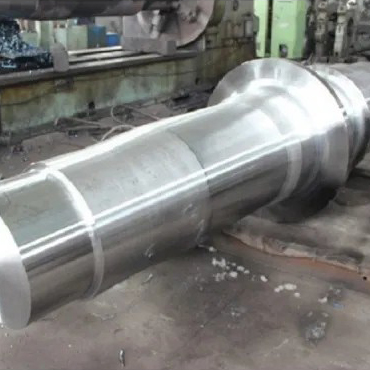
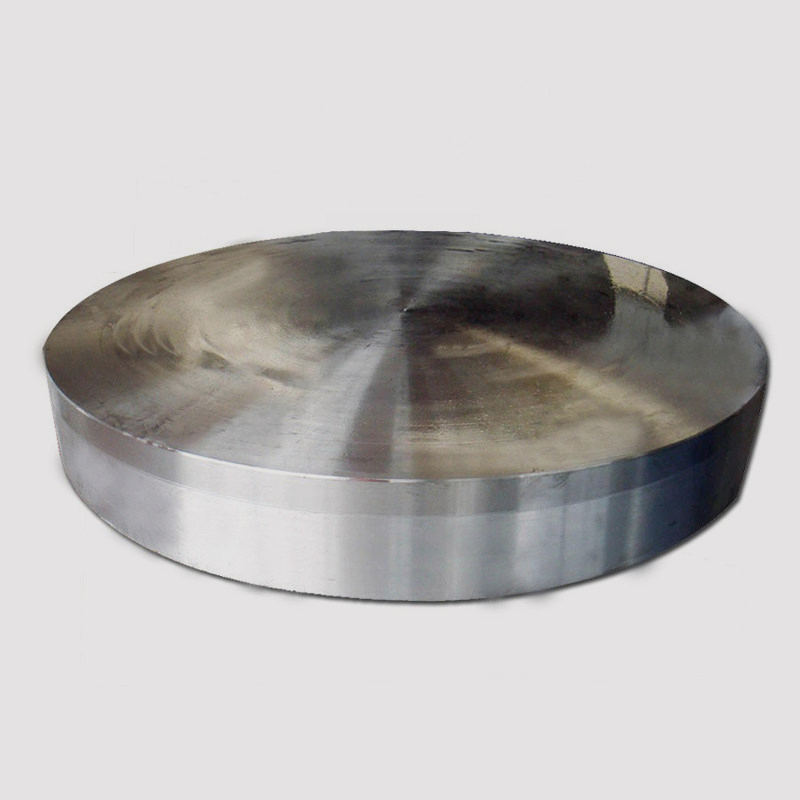
Large roller shafts (200-500 mm diameter) utilize open-die forging on hydraulic presses (2,000-10,000 ton capacity) with reduction ratios of 3:1 to 5:1 consolidating cast structure and eliminating porosity. Controlled forging temperatures (1,100-1,200 degrees Celsius) prevent overheating while achieving sufficient plastic flow for shape generation. Closed-die forging serves high-volume smaller shafts (50-150 mm) with near-net shapes reducing machining allowances to 3-5 mm.
Grain flow orientation parallel to the shaft axis provides 20-30% higher fatigue strength compared to longitudinal bar stock, with transverse grain flow at keyways and flanges managed through preform design. Ultrasonic testing per ASTM A388 verifies internal soundness, with rejection criteria for indications exceeding 3 mm equivalent flat-bottom hole.
Surface Treatment and Corrosion Protection
4140 and 8620 forged steel shafts require protective systems for corrosive environments. Chrome plating (50-100 micrometers) provides hard wear surfaces (800-1,000 HV) with corrosion protection, though micro-cracking limits effectiveness in severe exposures. Thermal spray coatings (WC-Co or CrC-NiCr) achieve 1,000+ HV hardness with dense structures resisting chemical attack. For less severe environments, zinc phosphate conversion coatings with oil or wax impregnation provide temporary protection during storage and early service.
The selection between SS316/SS304 roller shafts and 4140/8620 forged steel shafts ultimately balances environmental severity against mechanical demands, with hybrid approaches (stainless-clad carbon steel cores) emerging for applications requiring both corrosion immunity and high strength.