

 English
 русский
What Defines a Round Steel Shaft
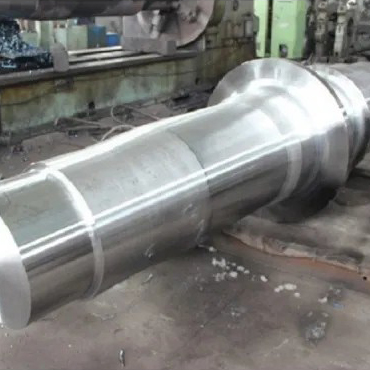
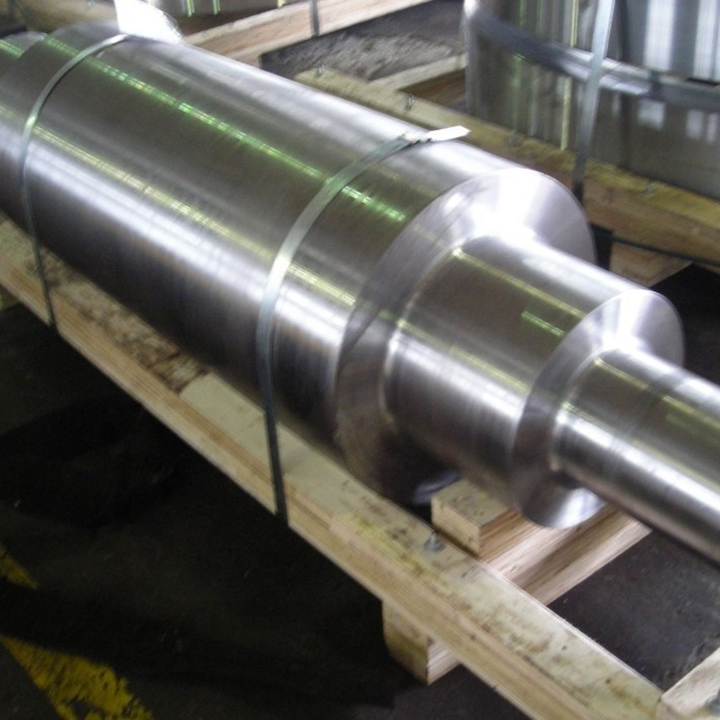
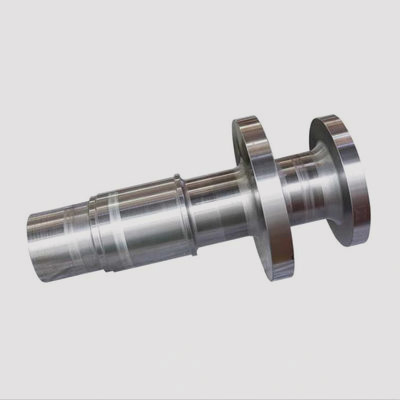
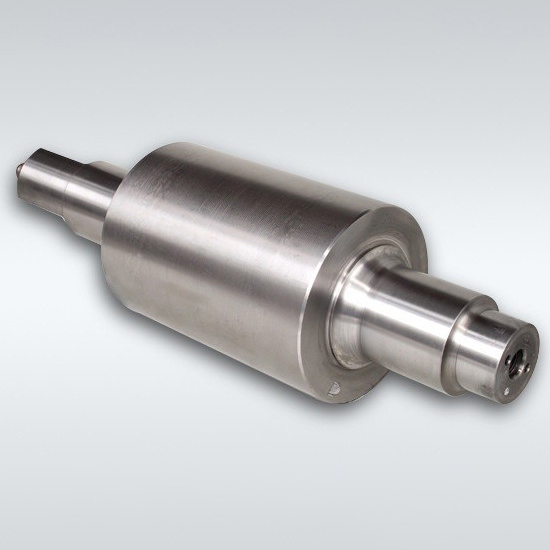
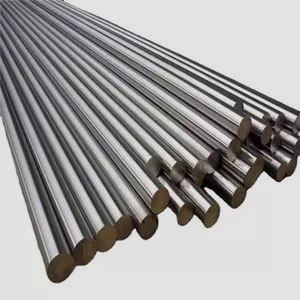
A round steel shaft is a cylindrical bar of steel manufactured to specific dimensional tolerances, surface finish standards, and mechanical property requirements for use as a rotating, sliding, or load-bearing element in mechanical assemblies. The term covers a wide range of products—from precision-ground linear motion shafts with sub-micron surface finishes to rough-turned transmission shafts intended for further machining—and the differences between them are significant enough that selecting the wrong type can result in premature bearing failure, excessive wear, or dimensional incompatibility with mating components.
The round cross-section is not arbitrary. It allows torque transmission without stress concentrations at corners, accommodates standard bearing bores with predictable fits, and enables symmetrical machining operations such as turning, grinding, and centerless grinding that produce consistent geometry along the entire length. Straightness, roundness, and surface finish are the three geometric parameters that most directly determine shaft performance in bearing-supported or sliding applications, often more so than raw tensile strength.
Common Steel Grades and Their Mechanical Properties
Material selection drives both performance and machinability. The grades below cover the majority of round steel shaft applications across industrial, automotive, and precision engineering sectors.
Low Carbon Steel (e.g., AISI 1018, S20C)
With a carbon content of approximately 0.15–0.20%, these grades offer good weldability, moderate tensile strength (typically 400–520 MPa), and excellent machinability. They are used for lightly loaded shafts, linkage pins, and general mechanical components where case hardening is acceptable but through-hardening is not required. Cold-drawn 1018 bar has better surface finish and tighter dimensional tolerances than hot-rolled equivalents, making it preferable when additional grinding is not planned.
Medium Carbon Steel (e.g., AISI 1045, C45)
The most widely used grade for general-purpose shafting. At 0.42–0.50% carbon, it achieves tensile strengths of 570–700 MPa in the normalized condition and up to 900 MPa after quench-and-temper treatment. AISI 1045 offers a practical balance of strength, toughness, and machinability that suits the majority of power transmission shaft applications including motor shafts, gearbox input and output shafts, and conveyor drive shafts. It responds well to induction hardening for improved surface wear resistance without bulk heat treatment of the entire part.
Alloy Steel (e.g., AISI 4140, 42CrMo4)
The addition of chromium and molybdenum significantly improves hardenability, fatigue strength, and toughness compared to plain carbon grades. Quenched and tempered 4140 typically achieves 850–1,000 MPa tensile strength with good impact resistance. It is specified for shafts operating under combined torsional and bending loads, elevated temperatures, or cyclic stress conditions—applications such as crane hoist shafts, heavy-duty pump shafts, and agricultural equipment drivelines. The trade-off is reduced machinability relative to 1045 and the requirement for controlled heat treatment to achieve consistent properties.
Case-Hardening Steel (e.g., AISI 8620, 20CrMnTi)
These low-alloy grades are designed for carburizing or carbonitriding treatment, which produces a hard, wear-resistant outer case (typically 58–62 HRC) while retaining a tough, ductile core. They are used where surface hardness for wear resistance must coexist with impact resistance—camshafts, splined shafts in transmissions, and heavily loaded worm gear shafts are representative examples. Case depth is a critical specification, typically 0.5–2.0 mm depending on the contact stress requirements.
Stainless Steel (e.g., AISI 303, 304, 440C)
Stainless round shafts are specified when corrosion resistance is a primary requirement. Grade 303 offers the best machinability among austenitic stainless grades; 304 provides better corrosion resistance with slightly reduced machinability; 440C is a martensitic grade that can be hardened to approximately 58 HRC for bearing shaft applications in wet or corrosive environments. Stainless shafts are standard in food processing, pharmaceutical, and marine equipment. Note that austenitic grades (303, 304) cannot be through-hardened—where both corrosion resistance and surface hardness are required, 440C or a coated carbon steel shaft should be evaluated.
| Grade | Tensile Strength (typical) | Hardenability | Machinability | Key Advantage |
|---|---|---|---|---|
| AISI 1018 | 400–520 MPa | Case only | Excellent | Weldability, low cost |
| AISI 1045 | 570–900 MPa | Through / surface | Good | General-purpose balance |
| AISI 4140 | 850–1,000 MPa | Through | Moderate | Fatigue and toughness |
| AISI 8620 | 520–800 MPa (core) | Case (carburize) | Good | Hard case, tough core |
| AISI 440C | 750–1,900 MPa | Through | Moderate | Corrosion + wear resistance |
Dimensional Tolerances and Surface Finish Standards
Tolerance and finish specifications are where round steel shaft products diverge most significantly in price and application suitability. Understanding the available standards prevents over-specifying—and overpaying—for precision that the application does not require.
Hot-Rolled vs. Cold-Drawn vs. Ground Bar
Hot-rolled round bar is the lowest-cost form and carries the widest tolerances—diameter variation of ±0.5% to ±1% is typical, and surface finish (Ra) is usually 6.3–12.5 µm. It is appropriate as raw material for further machining but unsuitable for direct use in bearing bores or linear guides. Cold-drawn bar improves dimensional tolerance significantly (typically h9 or h11 under ISO 286) and reduces surface roughness to approximately 1.6–3.2 µm Ra, making it acceptable for many general-purpose shaft applications without additional grinding. Precision-ground shafting achieves tolerances of h6 or tighter and surface finishes of 0.2–0.8 µm Ra, which is required for interference fits with rolling element bearings, linear ball bushings, and hydraulic cylinder rods.
ISO Fit System and Shaft Tolerance Grades
Under ISO 286, shaft diameter tolerances are designated by a letter (indicating the deviation from nominal) and a number (indicating the tolerance grade). For round steel shafts, the most frequently encountered designations are h6 for precision fits with bearings and sliding components, h8 for general-purpose fits, and h11 for loose clearance applications. The fundamental deviation for the h series is zero on the upper limit, meaning the shaft diameter is always at or below nominal—this ensures clearance fits with ISO hole tolerances of H6, H7, and H8 without interference. Specifying the correct ISO tolerance class is especially important when ordering pre-ground shafting for direct installation without further machining.
Straightness and Roundness
Surface finish alone does not guarantee shaft performance if geometric form is poor. Straightness tolerance for precision linear motion shafts is typically specified at 0.05–0.2 mm per meter; roundness (circularity) at 0.005–0.02 mm for bearing-quality shafts. These values must be maintained across the full shaft length, not just at measurement points. Shafts exceeding 1.5 m are particularly prone to sag-induced straightness deviation during grinding—reputable suppliers test straightness after processing and certificate values are meaningful only with traceability to the supplied bar.
Design Considerations for Shaft Load and Fatigue Life
Shaft failures in service are predominantly fatigue failures initiating at stress concentrations—shoulders, keyways, cross-holes, and surface defects—rather than static overload failures. Design decisions that reduce stress concentration factors (Kt) at these features have a disproportionately large effect on fatigue life.
At diameter transitions, the fillet radius is the primary variable. Increasing the fillet radius from 1 mm to 3 mm at a shaft shoulder can reduce Kt from approximately 2.0 to 1.4, nearly halving the stress amplitude at that location for the same applied bending moment. Where a sharp shoulder is functionally required for bearing location, a relief groove or undercut can serve the same geometric purpose with a controlled stress concentration.
Keyways reduce the effective cross-section and introduce stress concentrations at the keyway ends. The standard end-milled keyway produces Kt values of 2.0–2.5 in bending; a sled-runner (through) keyway reduces this to approximately 1.6. Where torque transmission requirements allow, press-fit or splined connections eliminate keyway stress concentrations entirely and are preferred in high-cycle fatigue applications.
Surface finish at the shaft's outer diameter also affects fatigue strength directly. The endurance limit of a polished laboratory specimen is not achieved in service—a machined surface with Ra 1.6 µm carries a surface factor of approximately 0.85 relative to the polished reference; a ground surface at Ra 0.4 µm approaches 0.95. Shot peening after final machining introduces compressive residual stresses that can raise effective fatigue strength by 20–30% in high-stress applications, and is standard practice for critical aerospace and heavy machinery shafts.
Procurement Checklist: Specifying a Round Steel Shaft
A complete shaft specification avoids ambiguity between buyer and supplier and prevents receiving material that is technically within generic standards but unsuitable for the intended use. The following parameters should be defined explicitly in any purchase order or drawing call-out.
- Material grade and standard: Specify by both common designation (e.g., AISI 4140) and the applicable national or international standard (e.g., ASTM A434, EN 10083-3). Dual certification is available for most common grades.
- Heat treatment condition: State whether the shaft is required in the as-rolled, normalized, annealed, or quenched-and-tempered condition, and specify the target hardness range (HRC or HB) if heat treated.
- Diameter and length tolerance: State the ISO tolerance designation (e.g., h6, h8) or a bilateral tolerance in millimeters. For length, specify whether cut-to-length tolerance is ±1 mm, ±0.5 mm, or as-sawn.
- Surface finish: Specify Ra value in µm and the measurement method (contact profilometer per ISO 4288 is standard). State whether the finish applies to the full length or designated zones only.
- Straightness: Define the maximum bow in mm per meter of length, particularly for shafts over 500 mm.
- Mill certificate: Request a material test report (MTR) per EN 10204 3.1 or 3.2 confirming chemical composition, mechanical properties, and heat number traceability. For safety-critical applications, third-party inspection should be specified.
For standard off-the-shelf precision shafting—such as that used in linear motion systems—many suppliers stock ground and polished bar in h6 tolerance, 0.4–0.8 µm Ra finish, and straightness within 0.05 mm/m in common diameters from 6 mm to 80 mm. These stocked products are economical for prototype and low-volume production; custom-ground shafts become cost-effective at higher volumes or non-standard diameters.