

 English
 русский
What Is a Casting Steel Shaft?
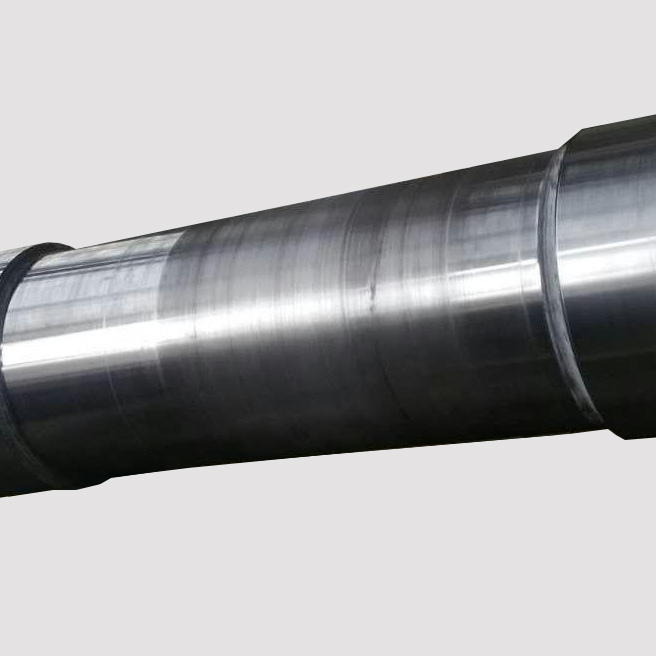
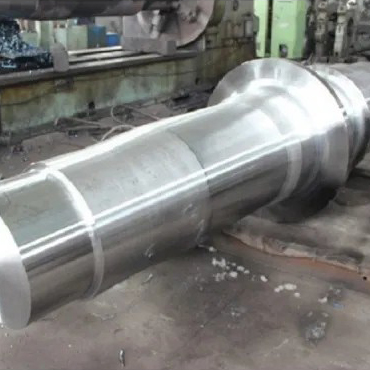
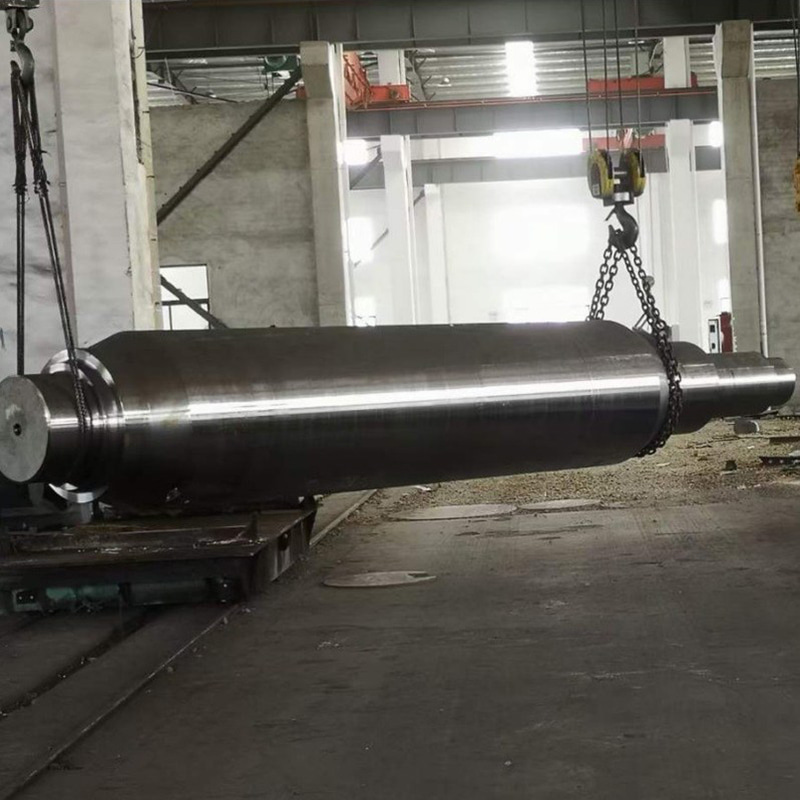
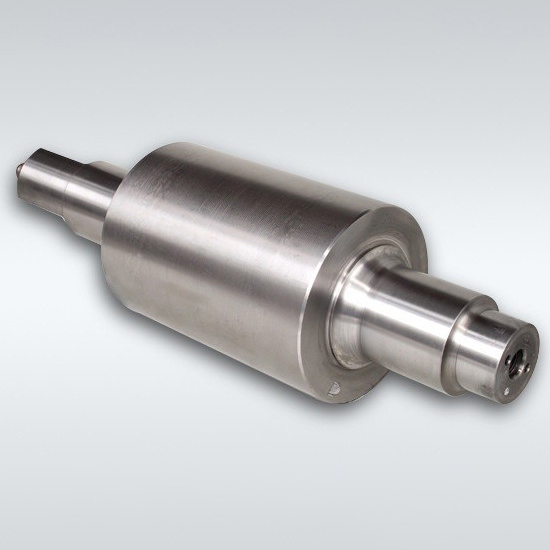
A casting steel shaft is a rotating or load-bearing cylindrical component produced through the steel casting process—molten steel is poured into a shaped mold, solidified, and then finish-machined to dimensional tolerances. Unlike forged shafts, which are shaped by compressive force from solid billets, cast steel shafts are formed directly from liquid metal, allowing complex geometries, integrated features, and large cross-sections that would be impractical or uneconomical to forge or machine from bar stock.
Casting steel shafts are found throughout heavy industry wherever high torque transmission, significant radial or axial loads, and long service life must be achieved simultaneously. Typical end markets include mining equipment, cement mills, rolling mills, marine propulsion systems, wind turbines, and large pumps or compressors.
Steel Grades Commonly Used for Cast Shafts
The choice of steel grade governs the shaft's mechanical performance, heat-treatment response, and machinability. Several alloy families are regularly specified:
| Steel Grade / Type | Typical Tensile Strength | Key Characteristics | Common Applications |
|---|---|---|---|
| Carbon Cast Steel (e.g., ASTM A27, ZG230-450) | 450–620 MPa | Good machinability, cost-effective | General machinery, conveyors |
| Low-Alloy Cast Steel (Cr-Mo, Mn-Si) | 620–900 MPa | Higher hardenability, good toughness | Mining drives, mill shafts |
| High-Alloy Cast Steel (Cr-Ni-Mo) | 900–1100 MPa | Excellent fatigue resistance, wear resistance | Heavy rolling mills, marine shafts |
| Stainless Cast Steel (CF8M, CA6NM) | 550–760 MPa | Corrosion resistance, suitable for wet environments | Pump shafts, offshore equipment |
For heavy-duty shafts exceeding 5 tonnes, low-alloy Cr-Mo steels are the most widely selected family because they combine deep hardenability—critical for large cross-sections—with reliable toughness after quench-and-temper heat treatment.
Casting Process Options and Their Trade-offs
The casting route chosen affects internal soundness, dimensional accuracy, surface finish, and production lead time. For steel shafts specifically, three processes are most relevant:
Sand Casting
Sand casting remains the dominant method for large steel shafts, particularly those weighing hundreds of kilograms to tens of tonnes. Green sand or furan resin-bonded molds accommodate virtually unlimited size, and risering systems can be designed to feed solidification shrinkage effectively. The trade-off is a relatively rough as-cast surface (Ra 12.5–25 μm) and dimensional tolerances of ±1–3 mm, which must be corrected by subsequent machining.
Centrifugal Casting
For hollow or tubular shaft forms—such as roll bodies or sleeve shafts—centrifugal casting is preferred. The rotating mold forces denser metal to the outer wall, pushing non-metallic inclusions and porosity toward the bore, which is then machined away. The result is a cleaner, denser outer skin with superior fatigue resistance compared to statically cast equivalents. Centrifugal casting is cost-effective for cylindrical symmetry but impractical for complex stepped profiles.
Investment Casting
Investment (lost-wax) casting produces near-net-shape steel shafts with tight dimensional tolerances (CT4–CT6) and fine surface finish (Ra 1.6–6.3 μm), minimizing machining allowances. It is economical for medium-sized precision shafts produced in moderate volumes, though tooling costs and size limits (generally under 200 kg for steel) restrict its use on the largest shaft components.
Heat Treatment and Surface Engineering for Cast Steel Shafts
As-cast steel microstructures contain coarse columnar grains, segregation, and residual casting stresses—none of which are acceptable in a finished shaft. Heat treatment is therefore not optional; it is a mandatory step that transforms cast microstructure into a homogeneous, high-performance condition.
- Normalizing refines grain size and relieves segregation by heating above the upper critical temperature and air cooling. It is often the first step before further hardening.
- Quench and temper (Q&T) is applied to alloy steel shafts to achieve specified strength and toughness combinations. Water or oil quench followed by tempering at 550–650 °C is typical for Cr-Mo grades.
- Stress relief annealing at 550–600 °C after rough machining reduces distortion in subsequent finishing cuts on large shafts.
- Surface hardening—induction hardening of bearing seats and journals, or nitriding for wear-critical surfaces—achieves case hardness of 50–60 HRC while preserving a tough core, significantly extending service life in abrasive or high-contact-stress environments.
Quality Assurance: Inspection Methods for Cast Steel Shafts
Subsurface defects—shrinkage cavities, gas porosity, hot tears, and inclusion clusters—are the primary failure risks in cast steel shafts. A rigorous inspection regime is essential before any shaft enters service, particularly in safety-critical or high-load applications.
- Ultrasonic testing (UT) is the primary volumetric inspection method, capable of detecting internal discontinuities from 0.5 mm equivalent flat-bottom hole diameter in large forgings and castings. ASTM A609 and EN 12680 define acceptance criteria for cast steel.
- Magnetic particle inspection (MPI) reveals near-surface cracks and seams on ferritic steels after machining, particularly at stress-concentration features such as keyways and fillets.
- Radiographic testing (RT) provides a permanent image record of internal soundness and is often specified for critical shaft castings under pressure-equipment or structural codes.
- Mechanical testing from attached test coupons—tensile, impact (Charpy), and hardness—verifies that heat treatment has achieved the specified property range throughout the casting.
Buyers specifying casting steel shafts for critical drives should require a full material test report (MTR) traceable to the specific casting heat number, alongside third-party witnessed inspection by a recognized body such as Bureau Veritas, Lloyd's Register, or TÜV.
Cast vs. Forged Steel Shafts: When Does Casting Win?
Forging remains the preferred route for high-volume, moderate-sized shafts where the wrought, grain-flow-aligned microstructure provides a distinct fatigue advantage. However, casting offers compelling benefits in specific scenarios:
- Very large sizes: Steel ingots for forging shafts above 30–50 tonnes become extremely difficult to procure and process; casting has no inherent upper size limit.
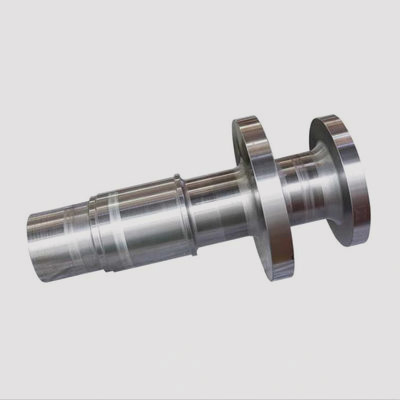
- Complex integrated geometry: Flanges, eccentric bores, keyway bosses, and mounting lugs can be cast-in, eliminating multi-piece fabrications and weld joints.
- Lower tooling investment for prototypes and small batches: Sand casting patterns cost a fraction of forging dies, making casting more economical for quantities below approximately 20–50 units.
- Material utilization: Near-net-shape casting reduces buy-to-fly ratio compared to machining a shaft from a large forged billet, lowering material cost on expensive alloy grades.
When properly designed with adequate risering, degassing, and post-cast heat treatment, modern cast steel shafts can approach the fatigue performance of equivalent forgings—closing a gap that once made casting a second-choice option in demanding drive applications.